

EcoWatch
Facebook 558k Twitter 222k Instagram 52k Subscribe Subscribe
  • Climate
  • Energy
  • Conservation
  • Food + Agriculture
  • Renewables
  • Oceans
  • Policy
  • Insights + Opinion
  • Go Solar Today
      • Top Companies By State
        • California Solar Companies
        • Texas Solar Companies
        • New York Solar Companies
        • Florida Solar Companies
        • See All States
      • Top Incentives By State
        • California Solar Incentives
        • Texas Solar Incentives
        • New York Solar Incentives
        • Florida Solar Incentives
        • See All States
      • Solar Panel Costs By State
        • Solar Panel Costs in California
        • Solar Panel Costs in Texas
        • Solar Panel Costs in New York
        • Solar Panel Costs in Florida
        • See All States
      • Value of Solar by State
        • Is Solar Worth It In California?
        • Is Solar Worth It in Texas?
        • Is Solar Worth It New York?
        • Is Solar Worth It In Florida?
        • See All States
      • Company Reviews
        • Tesla Solar Review
        • Sunrun Solar Review
        • SunPower Solar Review
        • Vivint Solar Review
        • See All Companies
      • Common Solar Questions
        • Can You Get Free Solar Panels?
        • Does Solar Increase Home Value?
        • What’re The Best Solar Batteries?
        • Can You Finance Solar?
        • Where To Buy Solar Panels?
        • Payback On Solar Panels?
      • Solar Resources
        • Interactive Solar Calculator
        • Federal Solar Tax Credit
        • Best Solar Panels For Most Homes
        • Tesla Solar Roof Review
        • Cheapest Solar Panels
      • Companies Compared
        • SunPower vs Tesla Solar
        • SunRun vs Tesla Solar
        • SunRun vs SunPower
        • SunPower vs Momentum Solar
        • SunPower vs ADT Solar
EcoWatch
  • Climate
  • Energy
  • Conservation
  • Food + Agriculture
  • Renewables
  • Oceans
  • Policy
  • Insights + Opinion
  • Go Solar Today
    • Go Solar Today
    • Top Companies By State
      • California Solar Companies
      • Texas Solar Companies
      • New York Solar Companies
      • Florida Solar Companies
      • See All States
    • Top Incentives By State
      • California Solar Incentives
      • Texas Solar Incentives
      • New York Solar Incentives
      • Florida Solar Incentives
      • See All States
    • Solar Panel Costs By State
      • Solar Panel Costs in California
      • Solar Panel Costs in Texas
      • Solar Panel Costs in New York
      • Solar Panel Costs in Florida
      • See All States
    • Value of Solar by State
      • Is Solar Worth It In California?
      • Is Solar Worth It in Texas?
      • Is Solar Worth It New York?
      • Is Solar Worth It In Florida?
      • See All States
    • Company Reviews
      • Tesla Solar Review
      • Sunrun Solar Review
      • SunPower Solar Review
      • Vivint Solar Review
      • See All Companies
    • Common Solar Questions
      • Can You Get Free Solar Panels?
      • Does Solar Increase Home Value?
      • What’re The Best Solar Batteries?
      • Can You Finance Solar?
      • Where To Buy Solar Panels?
      • Payback On Solar Panels?
    • Solar Resources
      • Interactive Solar Calculator
      • Federal Solar Tax Credit
      • Best Solar Panels For Most Homes
      • Tesla Solar Roof Review
      • Cheapest Solar Panels
    • Companies Compared
      • SunPower vs Tesla Solar
      • SunRun vs Tesla Solar
      • SunRun vs SunPower
      • SunPower vs Momentum Solar
      • SunPower vs ADT Solar

The best of EcoWatch right in your inbox. Sign up for our email newsletter!

    • About EcoWatch
    • Contact EcoWatch
    • Terms of Use
    • Privacy Policy
    • Learn About Solar Energy
    Facebook 558k Twitter 222k Instagram 52k
    EcoWatch
    • About EcoWatch
    • Contact EcoWatch
    • Terms of Use
    • Privacy Policy
    • Learn About Solar Energy
    Facebook 558k Twitter 222k Instagram 52k
    Home Science

    Why Are Bees Making Less Honey?

    By: Cristen Hemingway Jaynes
    Published: January 5, 2024
    Edited by Chris McDermott
    Facebook icon Twitter icon Pinterest icon Email icon
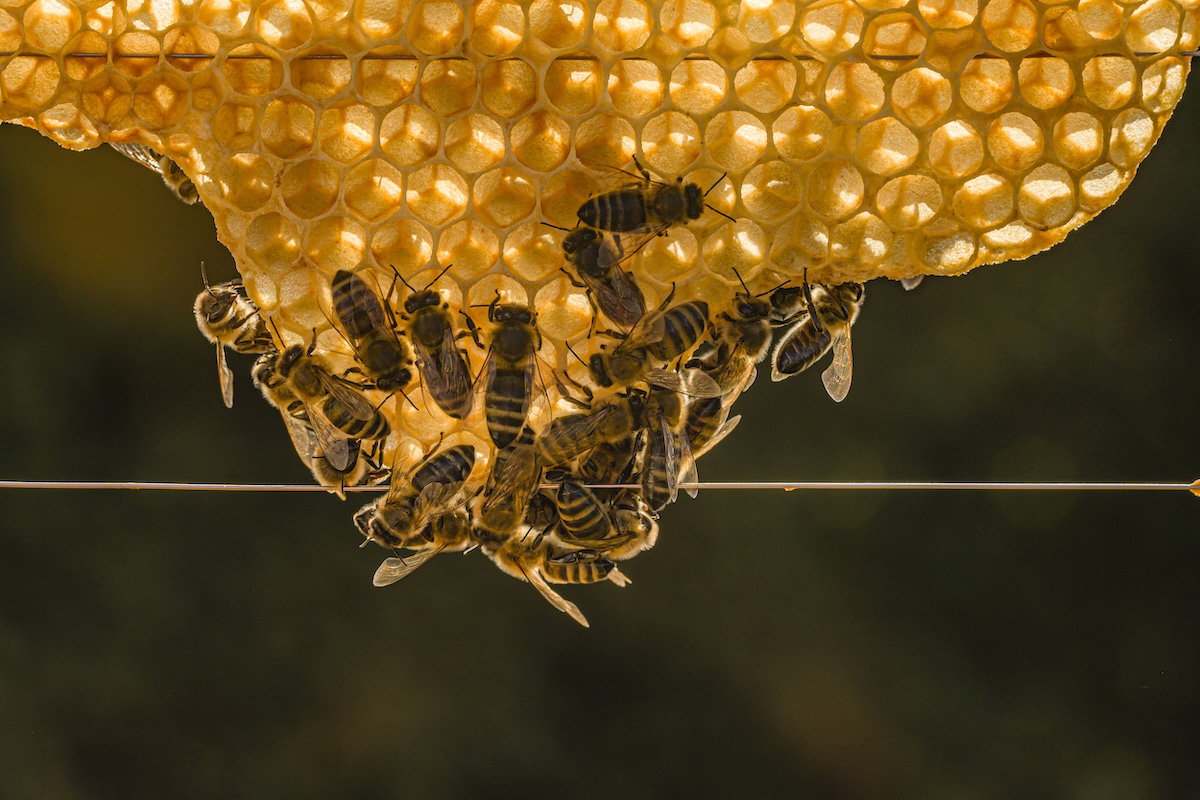
    Carniolan honey bees on a honeycomb in Dresden, Germany
    Carniolan honey bees on a honeycomb in Dresden, Germany. Frank Bienewald / LightRocket via Getty Images
    Why you can trust us

    Founded in 2005 as an Ohio-based environmental newspaper, EcoWatch is a digital platform dedicated to publishing quality, science-based content on environmental issues, causes, and solutions.

    Facebook icon Twitter icon Pinterest icon Email icon

    Since the 1990s, honey yields in the United States have been decreasing, but scientists and honey producers have not known why, according to a press release from Pennsylvania State University (Penn State).

    Now, a new study by researchers at Penn State has revealed hints as to the reasons behind dwindling honey supplies.

    “Pollinators are an essential component of terrestrial food webs and agricultural systems but are threatened by insufficient access to floral resources,” the study said. “Honey yields across the United States have decreased appreciably since the 1990s, concurrent with shifts in climate, land-use, and large-scale pesticide application. While many factors can affect honey accumulation, this suggests that anthropogenic stressors may be having large-scale impacts on the floral resources that pollinators depend on for their nutrition.”

    The study, “Examining spatial and temporal drivers of pollinator nutritional resources: evidence from five decades of honey bee colony productivity data,” was published in the journal Environmental Research Letters.

    The researchers examined five decades’ worth of data from all over the country, analyzing possible mechanisms and factors that could be impacting how many flowers were growing in various regions, as well as the quantity of honey made by honey bees, the press release said.

    The researchers found that land use — like fewer conservation programs supporting pollinators — the application of herbicides and yearly weather anomalies all affected honey yields.

    More From EcoWatch
    • What Is a Sun Number?
    • The Best Off-Grid Solar Systems
    • The Best Solar-Powered Water Pumps

    The study found that soil productivity and climate conditions were important factors in approximating yields. They discovered that productive soils led to higher honey yields in states that were located in both cool and warm regions.

    “It’s unclear how climate change will continue to affect honey production, but our findings may help to predict these changes,” said lead author of the study Gabriela Quinlan, who is a postdoctoral research fellow in the Department of Entomology and Center for Pollinator Research at Penn State, in the press release. “For example, pollinator resources may decline in the Great Plains as the climate warms and becomes more moderate, while resources may increase in the mid-Atlantic as conditions become hotter.”

    Christina Grozinger, who is a co-author of the paper as well as director of the Center for Pollinator Research and a professor of entomology at Penn State, said previous studies were conducted in just one region of the country.

    “What’s really unique about this study is that we were able to take advantage of 50 years of data from across the continental U.S. This allowed us to really investigate the role of soil, eco-regional climate conditions, annual weather variation, land use and land management practices on the availability of nectar for honey bees and other pollinators,” Grozinger said in the press release.

    The researchers said lack of flowers is one of the most substantial stressors for pollinators trying to gather enough nectar and pollen to eat. Since different regions of the U.S. support varied flowering plants depending upon soil characteristics and climate, they said interest in pinpointing landscapes and regions with an abundance of flowers for bees is growing.

    “A lot of factors affect honey production, but a main one is the availability of flowers,” Grozinger said. “Honey bees are really good foragers, collecting nectar from a variety of flowering plants and turning that nectar into honey. I was curious that if beekeepers are seeing less honey, does that mean there are fewer floral resources available to pollinators overall? And if so, what environmental factors were causing this change?”

    Quinlan said soil productivity is a factor that has not been sufficiently explored in determining the suitability of various landscapes for pollinators. Previous studies have looked at the importance of soil nutrients; fewer have examined how soil characteristics such as texture, structure and temperature affect pollinator sources.

    The researchers found that increases in lands in a national conservation program called the Conservation Reserve Program, which supports pollinators, and decreases in land used to cultivate soybeans have led to positive impacts on honey yields.

    Application rates of herbicides were also an important factor in forecasting yields, since the removal of flowering weeds can result in diminished nutritional resources for bees.

    “Our findings provide valuable insights that can be applied to improve models and design experiments to enable beekeepers to predict honey yields, growers to understand pollination services, and land managers to support plant–pollinator communities and ecosystem services,” Quinlan said in the press release.

    Subscribe to get exclusive updates in our daily newsletter!

      By signing up, you agree to the Terms of Use and Privacy Policy, and to receive electronic communications from EcoWatch Media Group, which may include marketing promotions, advertisements and sponsored content.

      Cristen Hemingway Jaynes

      Cristen is a writer of fiction and nonfiction. She holds a JD and an Ocean & Coastal Law Certificate from University of Oregon School of Law and an MA in Creative Writing from Birkbeck, University of London. She is the author of the short story collection The Smallest of Entryways, as well as the travel biography, Ernest’s Way: An International Journey Through Hemingway’s Life.
      Facebook icon Twitter icon Pinterest icon Email icon

      Read More

      New York Finalizes Rule for New Buildings to Be Electric
      New York is now the first state in the U.S.
      By Paige Bennett
      Mass Die-Off of Western Monarch Butterflies Linked to Pesticides, Study Finds
      A new peer-reviewed study has linked pesticides as a likely
      By Paige Bennett
      Deepest-Known Animal Communities Found Almost Six Miles Below Sea Level
      Thousands of mollusks and worms have been discovered by a
      By Cristen Hemingway Jaynes

      Subscribe to get exclusive updates in our daily newsletter!

        By signing up, you agree to the Terms of Use and Privacy Policy, and to receive electronic communications from EcoWatch Media Group, which may include marketing promotions, advertisements and sponsored content.

        Latest Articles

        • Methane 101: Understanding the Second Most Important Greenhouse Gas
          by EcoWatch
          August 5, 2025
        • New York Finalizes Rule for New Buildings to Be Electric
          by Paige Bennett
          August 4, 2025
        • Mass Die-Off of Western Monarch Butterflies Linked to Pesticides, Study Finds
          by Paige Bennett
          August 1, 2025
        • Deepest-Known Animal Communities Found Almost Six Miles Below Sea Level
          by Cristen Hemingway Jaynes
          August 1, 2025
        • Pristine Forest and Endangered Gorilla Habitat at Risk as Half of DRC Opened to Bids for Oil and Gas Drilling: Report
          by Cristen Hemingway Jaynes
          July 31, 2025
        • Global Hunger Fell Overall in 2024, but Rose in Africa and Western Asia as Climate and Conflict Threaten Progress: UN Report
          by Cristen Hemingway Jaynes
          July 30, 2025
        • Probiotic Found to Slow Disease Spread Among Florida Coral
          by Paige Bennett
          July 29, 2025
        • Earth Overshoot Day Reaches Record for Earliest Date
          by Paige Bennett
          July 28, 2025
        EcoWatch

        The best of EcoWatch right in your inbox. Sign up for our email newsletter!

          • Climate Climate
          • Animals Animals
          • Health + Wellness Health + Wellness
          • Insights + Opinion Insights + Opinion
          • Adventure Adventure
          • Oceans Oceans
          • Business Business
          • Solar Solar
          • About EcoWatch
          • Contact EcoWatch
          • EcoWatch Reviews
          • Terms of Use
          • Privacy Policy
          • Learn About Solar Energy
          • Learn About Deregulated Energy
          • EcoWatch UK
          Follow Us
          Facebook 558k
          Twitter 222k
          Instagram 52k
          Subscribe Subscribe

          Experts for a healthier planet and life.

          Mentioned by:
          Learn more
          • Privacy Policy
          • Terms of Use
          • Cookie Preferences
          • Do Not Sell My Information
          © 2025 EcoWatch. All Rights Reserved.

          Advertiser Disclosure

          Our editorial team is committed to creating independent and objective content focused on helping our readers make informed decisions. To help support these efforts we receive compensation from companies that advertise with us.

          The compensation we receive from these companies may impact how and where products appear on this site. This compensation does not influence the recommendations or advice our editorial team provides within our content. We do not include all companies, products or offers that may be available.