

EcoWatch
Facebook 558k Twitter 222k Instagram 52k Subscribe Subscribe
  • Climate
  • Energy
  • Conservation
  • Food + Agriculture
  • Renewables
  • Oceans
  • Policy
  • Insights + Opinion
  • Go Solar Today
      • Top Companies By State
        • California Solar Companies
        • Texas Solar Companies
        • New York Solar Companies
        • Florida Solar Companies
        • See All States
      • Top Incentives By State
        • California Solar Incentives
        • Texas Solar Incentives
        • New York Solar Incentives
        • Florida Solar Incentives
        • See All States
      • Solar Panel Costs By State
        • Solar Panel Costs in California
        • Solar Panel Costs in Texas
        • Solar Panel Costs in New York
        • Solar Panel Costs in Florida
        • See All States
      • Value of Solar by State
        • Is Solar Worth It In California?
        • Is Solar Worth It in Texas?
        • Is Solar Worth It New York?
        • Is Solar Worth It In Florida?
        • See All States
      • Company Reviews
        • Tesla Solar Review
        • Sunrun Solar Review
        • SunPower Solar Review
        • Vivint Solar Review
        • See All Companies
      • Common Solar Questions
        • Can You Get Free Solar Panels?
        • Does Solar Increase Home Value?
        • What’re The Best Solar Batteries?
        • Can You Finance Solar?
        • Where To Buy Solar Panels?
        • Payback On Solar Panels?
      • Solar Resources
        • Interactive Solar Calculator
        • Federal Solar Tax Credit
        • Best Solar Panels For Most Homes
        • Tesla Solar Roof Review
        • Cheapest Solar Panels
      • Companies Compared
        • SunPower vs Tesla Solar
        • SunRun vs Tesla Solar
        • SunRun vs SunPower
        • SunPower vs Momentum Solar
        • SunPower vs ADT Solar
EcoWatch
  • Climate
  • Energy
  • Conservation
  • Food + Agriculture
  • Renewables
  • Oceans
  • Policy
  • Insights + Opinion
  • Go Solar Today
    • Go Solar Today
    • Top Companies By State
      • California Solar Companies
      • Texas Solar Companies
      • New York Solar Companies
      • Florida Solar Companies
      • See All States
    • Top Incentives By State
      • California Solar Incentives
      • Texas Solar Incentives
      • New York Solar Incentives
      • Florida Solar Incentives
      • See All States
    • Solar Panel Costs By State
      • Solar Panel Costs in California
      • Solar Panel Costs in Texas
      • Solar Panel Costs in New York
      • Solar Panel Costs in Florida
      • See All States
    • Value of Solar by State
      • Is Solar Worth It In California?
      • Is Solar Worth It in Texas?
      • Is Solar Worth It New York?
      • Is Solar Worth It In Florida?
      • See All States
    • Company Reviews
      • Tesla Solar Review
      • Sunrun Solar Review
      • SunPower Solar Review
      • Vivint Solar Review
      • See All Companies
    • Common Solar Questions
      • Can You Get Free Solar Panels?
      • Does Solar Increase Home Value?
      • What’re The Best Solar Batteries?
      • Can You Finance Solar?
      • Where To Buy Solar Panels?
      • Payback On Solar Panels?
    • Solar Resources
      • Interactive Solar Calculator
      • Federal Solar Tax Credit
      • Best Solar Panels For Most Homes
      • Tesla Solar Roof Review
      • Cheapest Solar Panels
    • Companies Compared
      • SunPower vs Tesla Solar
      • SunRun vs Tesla Solar
      • SunRun vs SunPower
      • SunPower vs Momentum Solar
      • SunPower vs ADT Solar

The best of EcoWatch right in your inbox. Sign up for our email newsletter!

    • About EcoWatch
    • Contact EcoWatch
    • Terms of Use
    • Privacy Policy
    • Learn About Solar Energy
    Facebook 558k Twitter 222k Instagram 52k
    EcoWatch
    • About EcoWatch
    • Contact EcoWatch
    • Terms of Use
    • Privacy Policy
    • Learn About Solar Energy
    Facebook 558k Twitter 222k Instagram 52k
    Home Pollution

    Simple Cleaning Techniques Can Reduce Your Exposure to Toxic Chemicals From Wildfires

    By: Cristen Hemingway Jaynes
    Published: January 3, 2024
    Edited by Chris McDermott
    Facebook icon Twitter icon Pinterest icon Email icon
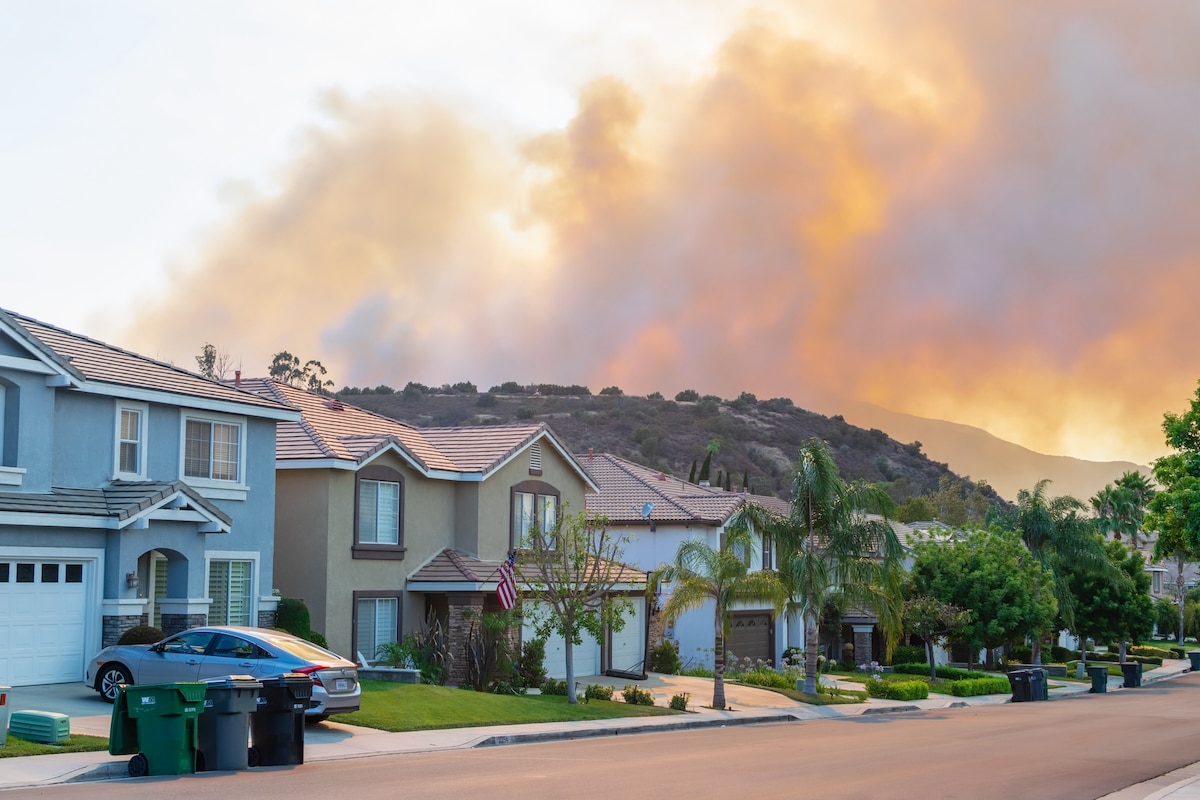
    Wildfire smoke near homes in Corona, California
    Wildfire smoke near homes in Corona, California on July 19, 2018. Tim Gray / iStock Editorial / Getty Images Plus
    Why you can trust us

    Founded in 2005 as an Ohio-based environmental newspaper, EcoWatch is a digital platform dedicated to publishing quality, science-based content on environmental issues, causes, and solutions.

    Facebook icon Twitter icon Pinterest icon Email icon

    The smell of campfire smoke is as associated with summer nights as woodsmoke from fireplaces and woodstoves is with winter. It adds an ancient scent and particles to the air that stick to your skin, hair and clothes.

    Wildfire smoke likewise doesn’t just leave an acrid smell behind. Its remnants contain harmful chemical compounds called polycyclic aromatic hydrocarbons (PAHs) that are highly toxic and can remain inside homes and businesses for days to months, a press release from Portland State University (PSU) said.

    A new study by Aurélie Laguerre, a senior research assistant at PSU, and Elliott T. Gall, an associate professor in mechanical and materials engineering at PSU, looked at how long wildfire smoke chemicals can last, as well as the best ways to remove them using common household cleaners.

    PAHs are created during the high temperature combustion process of wildfires.

    “They are associated with a wide variety of long-term adverse health consequences like cancer, potential complications in pregnancy and lung disease,” Gall said in the press release. “So if these compounds are depositing or sticking onto surfaces, there are different routes of exposure people should be aware of. By now, most people in Portland are probably thinking about how to clean their air during a wildfire smoke event, but they might not be thinking about other routes of exposure after the air clears.”

    During wildfires it is recommended that people reduce their risk of smoke exposure by closing doors and windows, running an air purifier and — in extreme cases or when outdoors — wearing a mask. But what are the best practices for after the wildfire and its smoke have subsided?

    “Wildfire smoke contains PAHs that, after infiltrating indoors, accumulate on indoor materials through particle deposition and partitioning from air,” Laguerre and Gall wrote in the study.

    The researchers examined PAH accumulation and retention on cotton, glass and air filters over a four-month period, the press release said.

    The initial findings were that PAH levels were elevated for weeks following exposure to wildfire smoke. It took air filters 37 days to reduce PAH levels by 74 percent, while levels of the toxic compounds on glass and cotton fell by 88 and 81 percent, respectively, in that timeframe. But the elongated exposure means increased health risks.

    “Cleaning processes efficiently remove PAHs, with reductions of 71% and 62% after cleaning smoke-exposed glass with ethanol and a commercial cleaner, respectively. Laundering smoke-exposed cotton in a washing machine and heated drying removed 48% of PAHs. An exposure assessment indicates that both inhalation and dermal PAH exposure pathways may be relevant following wildfire smoke events,” the authors wrote in the study.

    Following an extreme wildfire smoke event, air filters need to be changed.

    “Even if there’s potentially some more life in them, over time PAHs can partition off the filter and be emitted back into your space,” Gall said in the press release. “While it may be a slow process, our study shows partitioning of PAHs from filters and other materials loaded with smoke may result in concentrations of concern in air. And while that partitioning is occurring, dermal contact and ingestion of PAHs from the materials may be important. One example might be holding and drinking from a glass that was exposed to wildfire smoke.”

    More From EcoWatch
    • Why Switch to a Solar AC Unit or Solar HVAC Unit?
    • How to Conserve Energy
    • How Well Does Solar Hold Up in Extreme Weather?

    The study, “Polycyclic Aromatic Hydrocarbons (PAHs) in Wildfire Smoke Accumulate on Indoor Materials and Create Postsmoke Event Exposure Pathways,” was published in the journal Environmental Science & Technology.

    Gall pointed out the importance of considering the effects of the cleaning solutions that are commonly available. Other concerns include how materials such as ceramic or drywall respond to cleaning, and whether PAHs would be reduced to levels that were nontoxic if a person has access to a washing machine but not a dryer.

    The positive conclusion was that, while toxic PAHs can linger for a long time after wildfire smoke has subsided, simple cleaning techniques can significantly reduce exposure to them.

    According to Gall, the focus of future studies on reducing PAHs will be on other common indoor surfaces and cleaning techniques, in addition to working to understand the range of potential health effects from exposure.

    Subscribe to get exclusive updates in our daily newsletter!

      By signing up, you agree to the Terms of Use and Privacy Policy, and to receive electronic communications from EcoWatch Media Group, which may include marketing promotions, advertisements and sponsored content.

      Cristen Hemingway Jaynes

      Cristen is a writer of fiction and nonfiction. She holds a JD and an Ocean & Coastal Law Certificate from University of Oregon School of Law and an MA in Creative Writing from Birkbeck, University of London. She is the author of the short story collection The Smallest of Entryways, as well as the travel biography, Ernest’s Way: An International Journey Through Hemingway’s Life.
      Facebook icon Twitter icon Pinterest icon Email icon

      Read More

      Methane 101: Understanding the Second Most Important Greenhouse Gas
      By Olivia Rosane and Cristen Hemingway Jaynes
      By EcoWatch
      Mass Die-Off of Western Monarch Butterflies Linked to Pesticides, Study Finds
      A new peer-reviewed study has linked pesticides as a likely
      By Paige Bennett
      Deepest-Known Animal Communities Found Almost Six Miles Below Sea Level
      Thousands of mollusks and worms have been discovered by a
      By Cristen Hemingway Jaynes

      Subscribe to get exclusive updates in our daily newsletter!

        By signing up, you agree to the Terms of Use and Privacy Policy, and to receive electronic communications from EcoWatch Media Group, which may include marketing promotions, advertisements and sponsored content.

        Latest Articles

        • Methane 101: Understanding the Second Most Important Greenhouse Gas
          by EcoWatch
          August 5, 2025
        • New York Finalizes Rule for New Buildings to Be Electric
          by Paige Bennett
          August 4, 2025
        • Mass Die-Off of Western Monarch Butterflies Linked to Pesticides, Study Finds
          by Paige Bennett
          August 1, 2025
        • Deepest-Known Animal Communities Found Almost Six Miles Below Sea Level
          by Cristen Hemingway Jaynes
          August 1, 2025
        • Pristine Forest and Endangered Gorilla Habitat at Risk as Half of DRC Opened to Bids for Oil and Gas Drilling: Report
          by Cristen Hemingway Jaynes
          July 31, 2025
        • Global Hunger Fell Overall in 2024, but Rose in Africa and Western Asia as Climate and Conflict Threaten Progress: UN Report
          by Cristen Hemingway Jaynes
          July 30, 2025
        • Probiotic Found to Slow Disease Spread Among Florida Coral
          by Paige Bennett
          July 29, 2025
        • Earth Overshoot Day Reaches Record for Earliest Date
          by Paige Bennett
          July 28, 2025
        EcoWatch

        The best of EcoWatch right in your inbox. Sign up for our email newsletter!

          • Climate Climate
          • Animals Animals
          • Health + Wellness Health + Wellness
          • Insights + Opinion Insights + Opinion
          • Adventure Adventure
          • Oceans Oceans
          • Business Business
          • Solar Solar
          • About EcoWatch
          • Contact EcoWatch
          • EcoWatch Reviews
          • Terms of Use
          • Privacy Policy
          • Learn About Solar Energy
          • Learn About Deregulated Energy
          • EcoWatch UK
          Follow Us
          Facebook 558k
          Twitter 222k
          Instagram 52k
          Subscribe Subscribe

          Experts for a healthier planet and life.

          Mentioned by:
          Learn more
          • Privacy Policy
          • Terms of Use
          • Your Privacy Choices California Consumer Privacy Act (CCPA) Opt-Out Icon
          © 2026 EcoWatch. All Rights Reserved.

          Advertiser Disclosure

          Our editorial team is committed to creating independent and objective content focused on helping our readers make informed decisions. To help support these efforts we receive compensation from companies that advertise with us.

          The compensation we receive from these companies may impact how and where products appear on this site. This compensation does not influence the recommendations or advice our editorial team provides within our content. We do not include all companies, products or offers that may be available.