
 568k
568k  233k
233k  41k
41k  Subscribe
5 Vibrant Plants That Thrive in Shade and Cloudy Climates


 Why you can trust us
Founded in 2005 as an Ohio-based environmental newspaper, EcoWatch is a digital platform dedicated to publishing quality, science-based content on environmental issues, causes, and solutions.
Wondering what to plant as the days get shorter and long shadows creep across your garden? There are plenty of shade-loving plants to keep your yard vibrant during months of low light or abundant cloud cover.
Coral Bells (Heuchera)
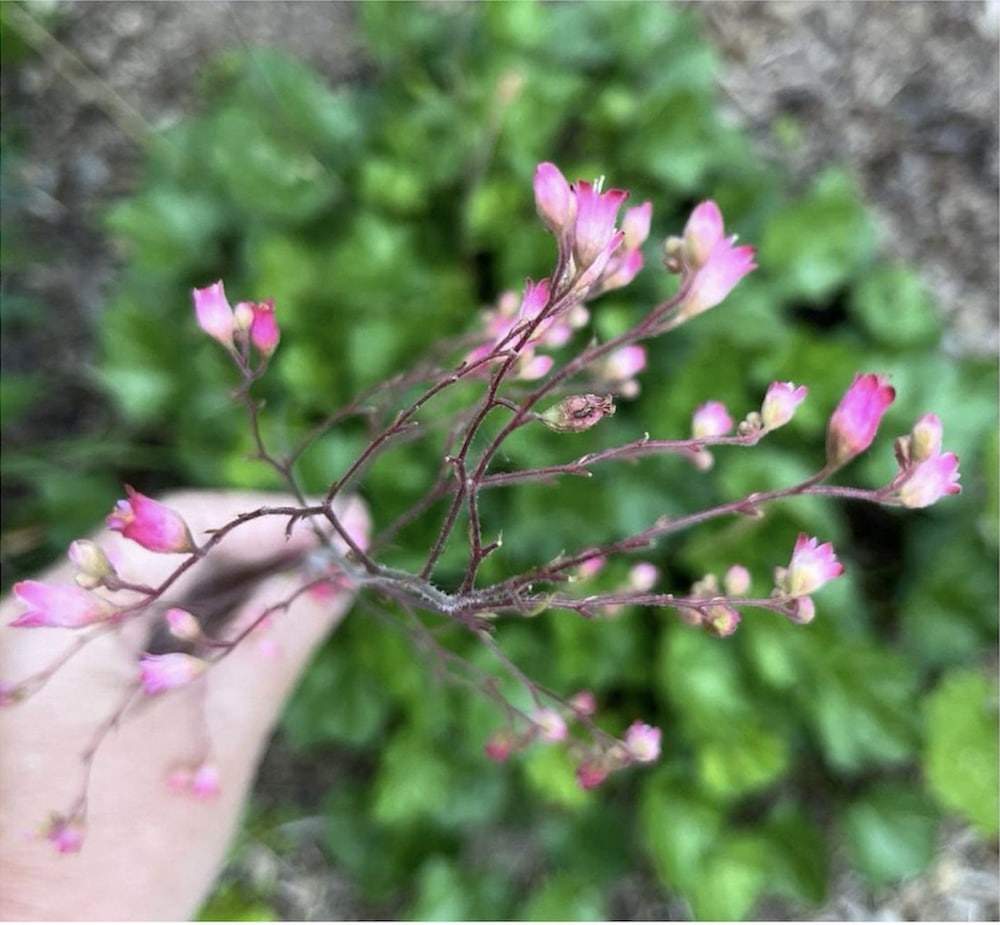
Heuchera in the Hudson Valley / Jenny Lee Fowler
Coral bells, also known as alumroot, are flowering plants with exquisite, bell-shaped blossoms that come in a range of colors. These perennials can add cheerful color to your garden through their bright flowers, as well as their multicolored leaves.
Despite their delicate appearance, these hardy plants will thrive in a variety of conditions, from full sunlight to full shade, but prefer partial shade.
Native to the Russian Far East, Mexico, parts of Canada and the U.S., particularly North Carolina, coral bells are most commonly found growing in wooded areas in filtered sun or shade.
“The deer literally cozy in our grasses to sleep for the night, so anything beyond our fence needs to fend for itself. Coral bells might get a little grazed early in the season, but they always bounce back. The variety we have has elegantly curving stalks and petite sprays of deep coral — perfect for adding to bouquets. Part of the beauty of the plant is that it’s a North American native with a broad range of colors in flower and foliage including a strikingly broad range of cultivars,” Jenny Lee Fowler, an artist living in the Hudson Valley, told EcoWatch.
Coral bells should be planted late in the fall or early spring and bloom late spring to midsummer. The plants themselves last three to four years and their stems bloom continuously for up to two months.
This lovely plant also has medicinal properties; the name alumroot refers to its benefit as an astringent used to stop bleeding.
Coral bells require intermittent watering, and prefer soil that is moist, enriched with organic matter or compost and well-draining.
Impatiens (Impatiens)
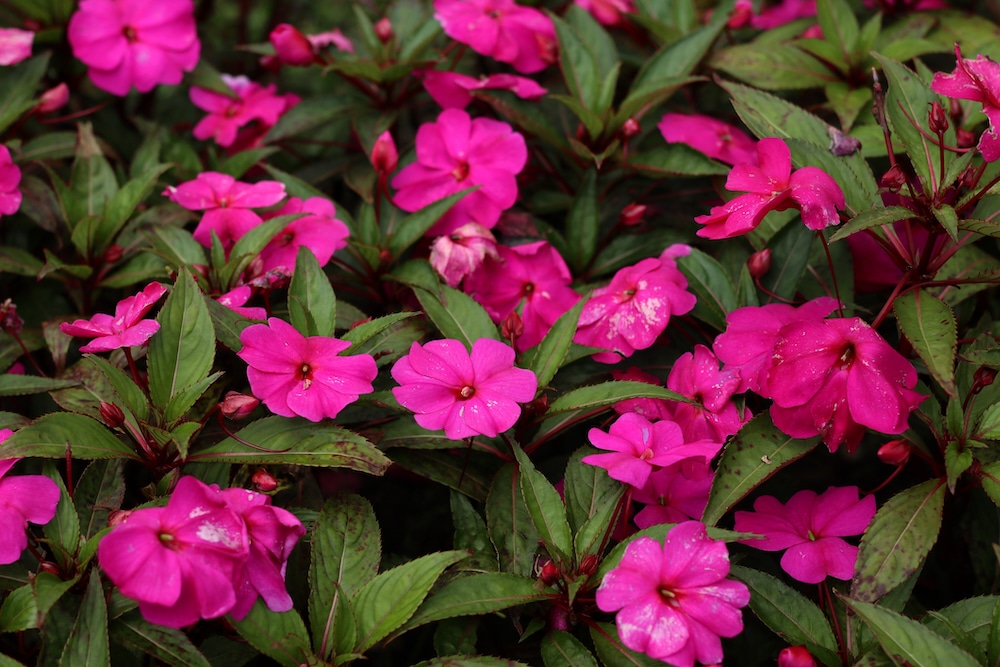
Impatiens flowers. Rizky Panuntun / Moment / Getty Images
Impatiens is a shade-loving plant that does well with two to four hours of dappled sunlight each day, such as morning sun and afternoon shade, or even full shade, though they will have fewer blooms in heavily shaded areas.
“A long, narrow flowerbed runs between the north side of my garage wall and a cement sidewalk. It’s quite shaded and has limited soil depth. It’s a challenging environment for gardening but impatiens have done well there. I plant them after the risk of frost has diminished, and they require very little maintenance. With just a bit of watering during dry spells and some pinching back to encourage fullness, they fill in the space nicely through early fall. I enjoy changing the color selections each year to provide variety,” Michigan novelist Cynthia Birk told EcoWatch.
Impatiens’ plentiful blossoms come in a variety of brilliant colors that stand out in any garden. They are actually perennial plants found mostly in Africa, North America and Eurasia, but are often grown as annuals.
In areas where frost is a concern, impatiens are traditionally planted in late spring after the last frost, ideally when the ground has reached at least 60 degrees Fahrenheit.
“Here in my area of Lower Michigan, along the dirt roads cutting through marshy and wooded lands, one will find in the summertime stands of wild Impatiens (I. capensis) displaying little hanging bells of mottled orange on slender stems,” John Hargrove, author and Hemingway researcher, told EcoWatch. “Commonly called Jewelweed, this Touch Me Not (whose seeds will literally burst from the inflated seed pods with a noticeable pop when touched) often grows near poison ivy, which is quite fortunate. The plant has a neat property that makes it effective in both removing the oils from one’s skin after contact with poison ivy, and soothing any subsequent rash. Simply crush the leaves and rub on the afflicted spot.”
Impatiens are self-seeding, though you might not see blooms on new plants until the following year.
These colorful flowers need frequent watering in well-drained soil kept moist but not soggy and enriched with organic material.
Primroses (Primula)

With whimsical orbs of delicate blooms resembling the puffball shape of a dandelion, primroses love partial shade, like the cool forest floor beneath a tree.
These enchanting woodland plants do not need much care other than regular watering and shade, and they prefer moist soil rich with organic matter.
Primroses thrive in overnight temperatures from 50 to 60 degrees Fahrenheit and lower than 80 degrees during the day.
You can expect to see their fanciful blossoms in early spring.
“Primroses will always brighten your day whether grown in the open garden, along a path, near a rock (they are a perfect rock garden plant) or in a container. From species to hybrids, primroses can add a wide range of colors and textures to your overall garden scheme. Ranging in size from tiny in stature to mounding, there are double-flowering forms that create stunning little pompoms; large-flowering forms in which the foliage is completely obscured; multi-colored forms that have prominent eyes and sometimes rings; and even green flowering forms that will give visitors a pause. All but the rarest of species are easy to grow, loving shady spots to sunny locations, and will reward one throughout the year,” Hargrove said.
Nasturtiums (Tropaeolum)

Late blooming nasturtium in Seattle. Sarah Mitchell
If you’re looking for a cheerful flower with many different colors and patterns that grows well in the shade and is also edible, nasturtiums might be the ideal choice for your garden.
Seattle and London are perfect examples of the cloudy, temperate climates that some nasturtiums prefer.
“Nasturtiums are very easy to grow here and will even reseed themselves for a little surprise in the next year. Their best features are their lily-pad-like leaves and vibrant flowers, which are edible and make any plate look exotic in the summer. My favorite variety have deep, purple flowers,” Sarah Mitchell, a lawyer and gardener from Seattle told EcoWatch.
Nasturtiums can add a splash of color to your garden, a peppery flavor to a salad, a lovely garnish to a cheese plate or be used as a graceful cake decoration. They also attract aphids — especially those with yellow flowers — which works well to keep the bugs away from other plants, like veggies and roses.
These bright annuals can be grown in a bushy, climbing or cascading presentation, but when it comes to regular care, they do not require much at all. In fact, the more you leave them alone, the better.
There are more than 50 types of nasturtiums, and they grow best in soil that is well-drained but not too rich or fertilized — the poorer the soil, the larger the blooms they’ll produce.
Foxgloves (Digitalis)
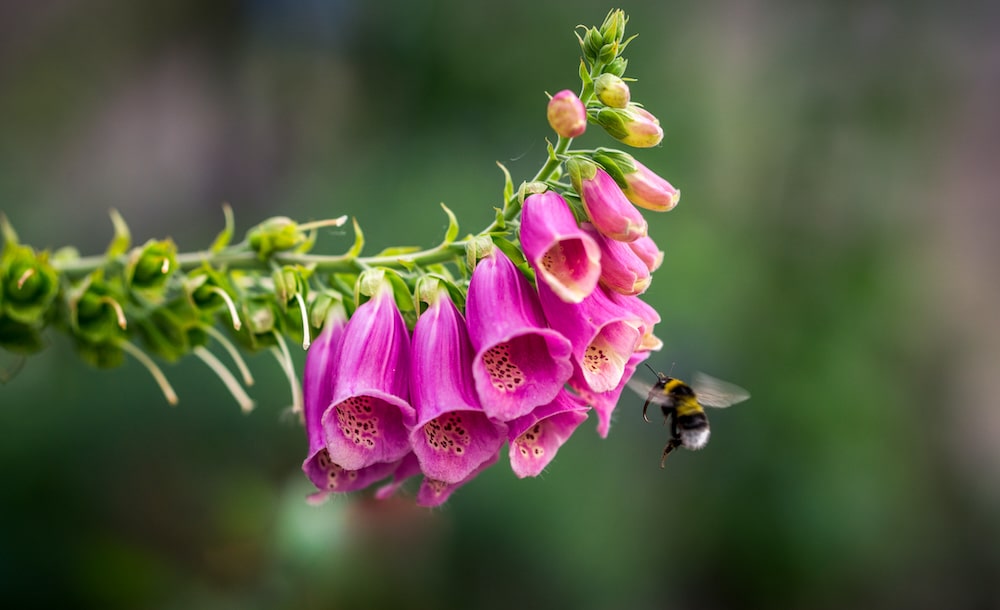
Foxgloves attract pollinators to gardens. Dirk Siemer / 500px / Getty Images
“One morning she saw, on the opposite side,
A Foxglove displaying his colours of pride:
She gazed on his form that in stateliness grew,
And envied his height and his brilliant hew
She mark’d how the flow’rets all gave way before him,
While they press’d round her dwelling with far less decorum”
— From “The Harebell and the Foxglove” by William Ball, 1828
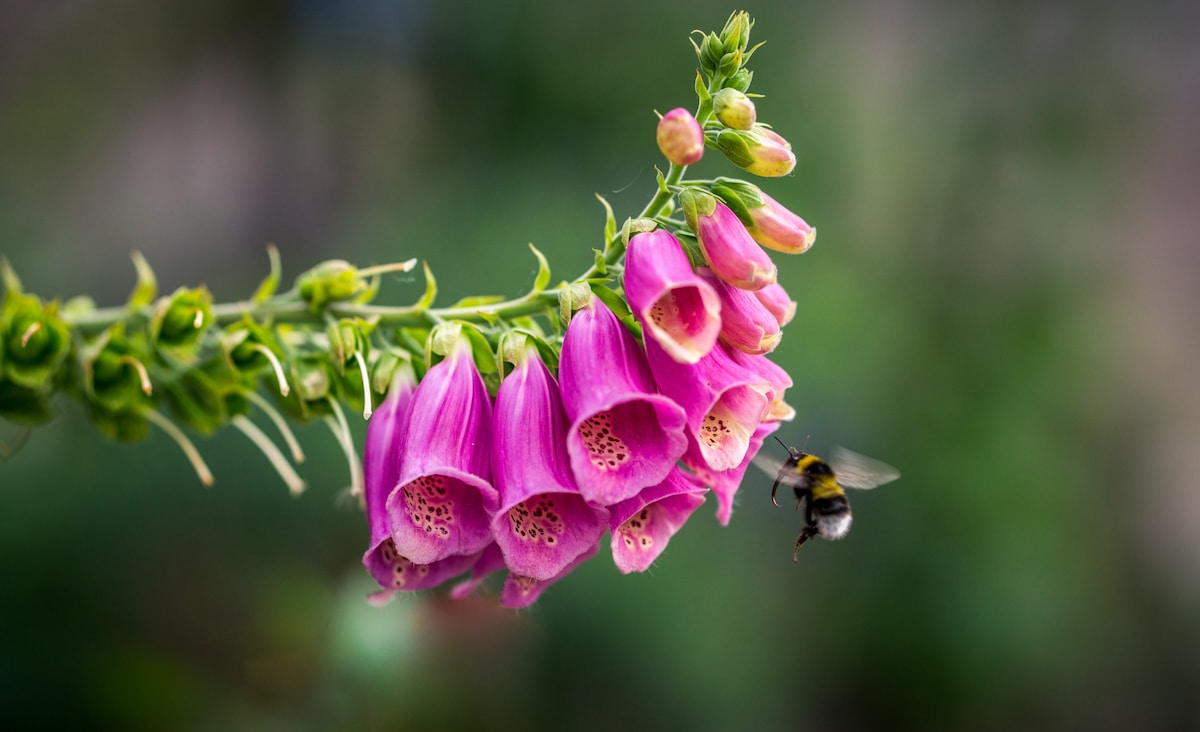
Foxgloves are tall, tubular wildflowers native to Europe, the Mediterranean and North Africa. They come in a variety of bright and pastel shades and most often flower in late spring or early summer.
Fall or spring is the best time of year to plant foxgloves. Since they grow in glades or woodlands in the wild, they prefer light cover or flecks of shade. One thing to note is that they are prone to powdery mildew if exposed to an overabundance of shade. They are used to rich, loamy soil made with lots of organic matter like leaves. This soil drains well and foxgloves will need to be watered regularly at first, then mostly only during dry periods.
These elegant herbaceous woodland plants can be either biennials or perennials. They are superb at attracting wildlife to gardens, as bumblebees and hummingbirds with their long tongues love the flowers’ abundant nectar.
Foxgloves can add color and grace to any garden, whether they are planted in shady courtyards or in borders on the side of a structure.
Though lovely, foxgloves are toxic and should not be ingested.
Subscribe to get exclusive updates in our daily newsletter!
By signing up, you agree to the Terms of Use and Privacy Policy & to receive electronic communications from EcoWatch Media Group, which may include marketing promotions, advertisements and sponsored content.