

EcoWatch
Facebook 558k Twitter 222k Instagram 52k Subscribe Subscribe
  • Climate
  • Energy
  • Conservation
  • Food + Agriculture
  • Renewables
  • Oceans
  • Policy
  • Insights + Opinion
  • Go Solar Today
      • Top Companies By State
        • California Solar Companies
        • Texas Solar Companies
        • New York Solar Companies
        • Florida Solar Companies
        • See All States
      • Top Incentives By State
        • California Solar Incentives
        • Texas Solar Incentives
        • New York Solar Incentives
        • Florida Solar Incentives
        • See All States
      • Solar Panel Costs By State
        • Solar Panel Costs in California
        • Solar Panel Costs in Texas
        • Solar Panel Costs in New York
        • Solar Panel Costs in Florida
        • See All States
      • Value of Solar by State
        • Is Solar Worth It In California?
        • Is Solar Worth It in Texas?
        • Is Solar Worth It New York?
        • Is Solar Worth It In Florida?
        • See All States
      • Company Reviews
        • Tesla Solar Review
        • Sunrun Solar Review
        • SunPower Solar Review
        • Vivint Solar Review
        • See All Companies
      • Common Solar Questions
        • Can You Get Free Solar Panels?
        • Does Solar Increase Home Value?
        • What’re The Best Solar Batteries?
        • Can You Finance Solar?
        • Where To Buy Solar Panels?
        • Payback On Solar Panels?
      • Solar Resources
        • Interactive Solar Calculator
        • Federal Solar Tax Credit
        • Best Solar Panels For Most Homes
        • Tesla Solar Roof Review
        • Cheapest Solar Panels
      • Companies Compared
        • SunPower vs Tesla Solar
        • SunRun vs Tesla Solar
        • SunRun vs SunPower
        • SunPower vs Momentum Solar
        • SunPower vs ADT Solar
EcoWatch
  • Climate
  • Energy
  • Conservation
  • Food + Agriculture
  • Renewables
  • Oceans
  • Policy
  • Insights + Opinion
  • Go Solar Today
    • Go Solar Today
    • Top Companies By State
      • California Solar Companies
      • Texas Solar Companies
      • New York Solar Companies
      • Florida Solar Companies
      • See All States
    • Top Incentives By State
      • California Solar Incentives
      • Texas Solar Incentives
      • New York Solar Incentives
      • Florida Solar Incentives
      • See All States
    • Solar Panel Costs By State
      • Solar Panel Costs in California
      • Solar Panel Costs in Texas
      • Solar Panel Costs in New York
      • Solar Panel Costs in Florida
      • See All States
    • Value of Solar by State
      • Is Solar Worth It In California?
      • Is Solar Worth It in Texas?
      • Is Solar Worth It New York?
      • Is Solar Worth It In Florida?
      • See All States
    • Company Reviews
      • Tesla Solar Review
      • Sunrun Solar Review
      • SunPower Solar Review
      • Vivint Solar Review
      • See All Companies
    • Common Solar Questions
      • Can You Get Free Solar Panels?
      • Does Solar Increase Home Value?
      • What’re The Best Solar Batteries?
      • Can You Finance Solar?
      • Where To Buy Solar Panels?
      • Payback On Solar Panels?
    • Solar Resources
      • Interactive Solar Calculator
      • Federal Solar Tax Credit
      • Best Solar Panels For Most Homes
      • Tesla Solar Roof Review
      • Cheapest Solar Panels
    • Companies Compared
      • SunPower vs Tesla Solar
      • SunRun vs Tesla Solar
      • SunRun vs SunPower
      • SunPower vs Momentum Solar
      • SunPower vs ADT Solar

The best of EcoWatch right in your inbox. Sign up for our email newsletter!

    • About EcoWatch
    • Contact EcoWatch
    • Terms of Use
    • Privacy Policy
    • Learn About Solar Energy
    Facebook 558k Twitter 222k Instagram 52k
    EcoWatch
    • About EcoWatch
    • Contact EcoWatch
    • Terms of Use
    • Privacy Policy
    • Learn About Solar Energy
    Facebook 558k Twitter 222k Instagram 52k
    Home Oceans

    Ocean Depths Targeted for Mining Are Rich in Complex and Unknown Marine Life, Scientists Find

    By: Cristen Hemingway Jaynes
    Published: July 25, 2023
    Edited by Chris McDermott
    Facebook icon Twitter icon Pinterest icon Email icon
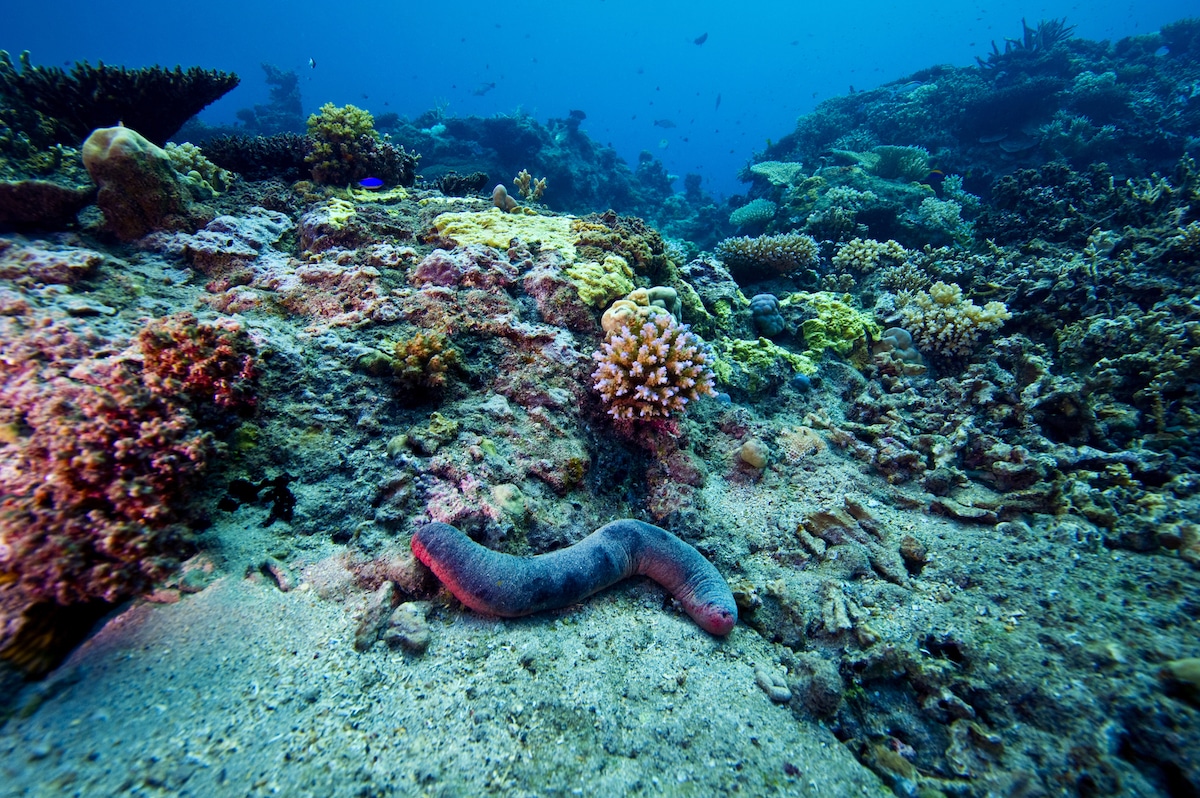
    A colorful, biodiverse Pacific Ocean reef in the Fiji Islands
    A Pacific Ocean reef in the Fiji Islands. Jason Edwards / The Image Bank / Getty Images
    Why you can trust us

    Founded in 2005 as an Ohio-based environmental newspaper, EcoWatch is a digital platform dedicated to publishing quality, science-based content on environmental issues, causes, and solutions.

    Facebook icon Twitter icon Pinterest icon Email icon

    Like the dry land on the surface of our planet, the ocean’s depths are made up of a variety of terrain, from plains and canyons to volcanic seamounts. Scientists believe there are as many as 10 million undiscovered marine species living on the ocean floor.

    Multiple new studies have found that a vast area at the bottom of the Pacific Ocean that is being targeted for destructive deep-sea mining — the Clarion-Clipperton Zone (CCZ) — is home to thousands of unknown species that are more complex than scientists once believed.

    Miners of minerals used in electric vehicle batteries and other green energy technologies have been looking at this abyssal plain for “nodules” on the seafloor that contain the minerals.

    More From EcoWatch
    • What Are Solar Panels Made Of?
    • Pros and Cons of Solar Energy
    • How to Fix Underperforming Solar Panels

    In a new study, an international team of scientists looked more closely at the biodiversity of this underwater region between Hawaii and Mexico. The researchers mapped marine animals’ distribution in the CCZ and discovered their communities were more complex than once thought.

    “Abyssal seafloor communities cover more than 60% of Earth’s surface. Despite their great size, abyssal plains extend across modest environmental gradients compared to other marine ecosystems. However, little is known about the patterns and processes regulating biodiversity or potentially delimiting biogeographical boundaries at regional scales in the abyss,” the authors of the study wrote. “Improved macroecological understanding of remote abyssal environments is urgent as threats of widespread anthropogenic disturbance grow in the deep ocean.”

    The study, “Carbonate compensation depth drives abyssal biogeography in the northeast Pacific,” was published in the journal Nature Ecology and Evolution.

    Along with the interest in mining the region has come more exploration and discoveries through commercially funded deep sea expeditions, reported AFP.

    Among the wonders of this dark, watery world include a shrimp with long, bristly legs, an enormous sea cucumber called the “gummy squirrel,” soft-bodied anemones, glass sponges and many types of mollusks, crustaceans and tiny worms.

    Conservationists have been calling for a moratorium on deep-sea mining, but last week the International Seabed Authority gave the go-ahead to a two-year plan for adopting a set of mining regulations.

    “We are on the side of the ocean,” said Gina Guillén Grillo, Costa Rica’s representative to the Seabed Authority who has helped lead the opposition to seabed mining, as The New York Times reported. “We know there is not enough science. To start right now would be a disaster.”

    More than half of Earth is covered in abyssal plains that are over 9,843 feet underwater. Erik Simon-Lledó, a marine biologist from Britain’s National Oceanography Centre, who was also the lead researcher of the study, called these regions the “last frontier.”

    “Every time we do a new dive we see something new,” Simon-Lledó said, according to AFP.

    Mining disrupts the seabed, causing large plumes of sediment that can wipe out habitat and smother delicate organisms. Nodules containing the sought-after minerals are also the homes of specialized marine animals.

    “With the science as it is at the present day, there is no circumstance under which we would support mining of the seabed,” said Sophie Benbow of the NGO Fauna and Flora, as reported by AFP.

    The unique array of marine life in the CCZ is due to the region’s size and age, but essential to its stunning biodiversity is the fact that it has remained undisturbed.

    According to the study, more than 90 percent of the approximately 5,000 species documented in the CCZ are new to science.

    Adrian Glover of Britain’s Natural History Museum, who was a co-author of the study, said mining regulations would need to consider that the distribution of marine creatures in the CCZ is “more complex than we thought.”

    Glover explained that each nodule likely took millions of years to develop and began as a shard from a fish ear bone or shark tooth that had settled on the ocean floor. The nodules grew slowly over time as minerals found at very low concentrations in the water naturally accumulated on them.

    The CCZ is ancient and adds only one centimeter of sediment every thousand years. Because the environment has been undisturbed for what Glover said is tens of millions of years, recovering from any mining would take an unknown amount of time.

    “You are basically writing that ecosystem off for probably centuries, maybe thousands of years, because the rate of recovery is so slow,” said Michael Norton, Environment Programme Director for the European Academies’ Science Advisory Council, as AFP reported. “It’s difficult to argue that that is not serious harm.”

    Subscribe to get exclusive updates in our daily newsletter!

      By signing up, you agree to the Terms of Use and Privacy Policy, and to receive electronic communications from EcoWatch Media Group, which may include marketing promotions, advertisements and sponsored content.

      Cristen Hemingway Jaynes

      Cristen is a writer of fiction and nonfiction. She holds a JD and an Ocean & Coastal Law Certificate from University of Oregon School of Law and an MA in Creative Writing from Birkbeck, University of London. She is the author of the short story collection The Smallest of Entryways, as well as the travel biography, Ernest’s Way: An International Journey Through Hemingway’s Life.
      Facebook icon Twitter icon Pinterest icon Email icon

      Read More

      Methane 101: Understanding the Second Most Important Greenhouse Gas
      By Olivia Rosane and Cristen Hemingway Jaynes
      By EcoWatch
      New York Finalizes Rule for New Buildings to Be Electric
      New York is now the first state in the U.S.
      By Paige Bennett
      Mass Die-Off of Western Monarch Butterflies Linked to Pesticides, Study Finds
      A new peer-reviewed study has linked pesticides as a likely
      By Paige Bennett

      Subscribe to get exclusive updates in our daily newsletter!

        By signing up, you agree to the Terms of Use and Privacy Policy, and to receive electronic communications from EcoWatch Media Group, which may include marketing promotions, advertisements and sponsored content.

        Latest Articles

        • Methane 101: Understanding the Second Most Important Greenhouse Gas
          by EcoWatch
          August 5, 2025
        • New York Finalizes Rule for New Buildings to Be Electric
          by Paige Bennett
          August 4, 2025
        • Mass Die-Off of Western Monarch Butterflies Linked to Pesticides, Study Finds
          by Paige Bennett
          August 1, 2025
        • Deepest-Known Animal Communities Found Almost Six Miles Below Sea Level
          by Cristen Hemingway Jaynes
          August 1, 2025
        • Pristine Forest and Endangered Gorilla Habitat at Risk as Half of DRC Opened to Bids for Oil and Gas Drilling: Report
          by Cristen Hemingway Jaynes
          July 31, 2025
        • Global Hunger Fell Overall in 2024, but Rose in Africa and Western Asia as Climate and Conflict Threaten Progress: UN Report
          by Cristen Hemingway Jaynes
          July 30, 2025
        • Probiotic Found to Slow Disease Spread Among Florida Coral
          by Paige Bennett
          July 29, 2025
        • Earth Overshoot Day Reaches Record for Earliest Date
          by Paige Bennett
          July 28, 2025
        EcoWatch

        The best of EcoWatch right in your inbox. Sign up for our email newsletter!

          • Climate Climate
          • Animals Animals
          • Health + Wellness Health + Wellness
          • Insights + Opinion Insights + Opinion
          • Adventure Adventure
          • Oceans Oceans
          • Business Business
          • Solar Solar
          • About EcoWatch
          • Contact EcoWatch
          • EcoWatch Reviews
          • Terms of Use
          • Privacy Policy
          • Learn About Solar Energy
          • Learn About Deregulated Energy
          • EcoWatch UK
          Follow Us
          Facebook 558k
          Twitter 222k
          Instagram 52k
          Subscribe Subscribe

          Experts for a healthier planet and life.

          Mentioned by:
          Learn more
          • Privacy Policy
          • Terms of Use
          • Your Privacy Choices California Consumer Privacy Act (CCPA) Opt-Out Icon
          © 2026 EcoWatch. All Rights Reserved.

          Advertiser Disclosure

          Our editorial team is committed to creating independent and objective content focused on helping our readers make informed decisions. To help support these efforts we receive compensation from companies that advertise with us.

          The compensation we receive from these companies may impact how and where products appear on this site. This compensation does not influence the recommendations or advice our editorial team provides within our content. We do not include all companies, products or offers that may be available.