

EcoWatch
Facebook 558k Twitter 222k Instagram 52k Subscribe Subscribe
  • Climate
  • Energy
  • Conservation
  • Food + Agriculture
  • Renewables
  • Oceans
  • Policy
  • Insights + Opinion
  • Go Solar Today
      • Top Companies By State
        • California Solar Companies
        • Texas Solar Companies
        • New York Solar Companies
        • Florida Solar Companies
        • See All States
      • Top Incentives By State
        • California Solar Incentives
        • Texas Solar Incentives
        • New York Solar Incentives
        • Florida Solar Incentives
        • See All States
      • Solar Panel Costs By State
        • Solar Panel Costs in California
        • Solar Panel Costs in Texas
        • Solar Panel Costs in New York
        • Solar Panel Costs in Florida
        • See All States
      • Value of Solar by State
        • Is Solar Worth It In California?
        • Is Solar Worth It in Texas?
        • Is Solar Worth It New York?
        • Is Solar Worth It In Florida?
        • See All States
      • Company Reviews
        • Tesla Solar Review
        • Sunrun Solar Review
        • SunPower Solar Review
        • Vivint Solar Review
        • See All Companies
      • Common Solar Questions
        • Can You Get Free Solar Panels?
        • Does Solar Increase Home Value?
        • What’re The Best Solar Batteries?
        • Can You Finance Solar?
        • Where To Buy Solar Panels?
        • Payback On Solar Panels?
      • Solar Resources
        • Interactive Solar Calculator
        • Federal Solar Tax Credit
        • Best Solar Panels For Most Homes
        • Tesla Solar Roof Review
        • Cheapest Solar Panels
      • Companies Compared
        • SunPower vs Tesla Solar
        • SunRun vs Tesla Solar
        • SunRun vs SunPower
        • SunPower vs Momentum Solar
        • SunPower vs ADT Solar
EcoWatch
  • Climate
  • Energy
  • Conservation
  • Food + Agriculture
  • Renewables
  • Oceans
  • Policy
  • Insights + Opinion
  • Go Solar Today
    • Go Solar Today
    • Top Companies By State
      • California Solar Companies
      • Texas Solar Companies
      • New York Solar Companies
      • Florida Solar Companies
      • See All States
    • Top Incentives By State
      • California Solar Incentives
      • Texas Solar Incentives
      • New York Solar Incentives
      • Florida Solar Incentives
      • See All States
    • Solar Panel Costs By State
      • Solar Panel Costs in California
      • Solar Panel Costs in Texas
      • Solar Panel Costs in New York
      • Solar Panel Costs in Florida
      • See All States
    • Value of Solar by State
      • Is Solar Worth It In California?
      • Is Solar Worth It in Texas?
      • Is Solar Worth It New York?
      • Is Solar Worth It In Florida?
      • See All States
    • Company Reviews
      • Tesla Solar Review
      • Sunrun Solar Review
      • SunPower Solar Review
      • Vivint Solar Review
      • See All Companies
    • Common Solar Questions
      • Can You Get Free Solar Panels?
      • Does Solar Increase Home Value?
      • What’re The Best Solar Batteries?
      • Can You Finance Solar?
      • Where To Buy Solar Panels?
      • Payback On Solar Panels?
    • Solar Resources
      • Interactive Solar Calculator
      • Federal Solar Tax Credit
      • Best Solar Panels For Most Homes
      • Tesla Solar Roof Review
      • Cheapest Solar Panels
    • Companies Compared
      • SunPower vs Tesla Solar
      • SunRun vs Tesla Solar
      • SunRun vs SunPower
      • SunPower vs Momentum Solar
      • SunPower vs ADT Solar

The best of EcoWatch right in your inbox. Sign up for our email newsletter!

    • About EcoWatch
    • Contact EcoWatch
    • Terms of Use
    • Privacy Policy
    • Learn About Solar Energy
    Facebook 558k Twitter 222k Instagram 52k
    EcoWatch
    • About EcoWatch
    • Contact EcoWatch
    • Terms of Use
    • Privacy Policy
    • Learn About Solar Energy
    Facebook 558k Twitter 222k Instagram 52k
    Home Animals

    Despite Their ‘Bad Rap,’ Bats Can Help Farmers

    By: Cristen Hemingway Jaynes
    Published: April 17, 2024
    Edited by Chris McDermott
    Facebook icon Twitter icon Pinterest icon Email icon
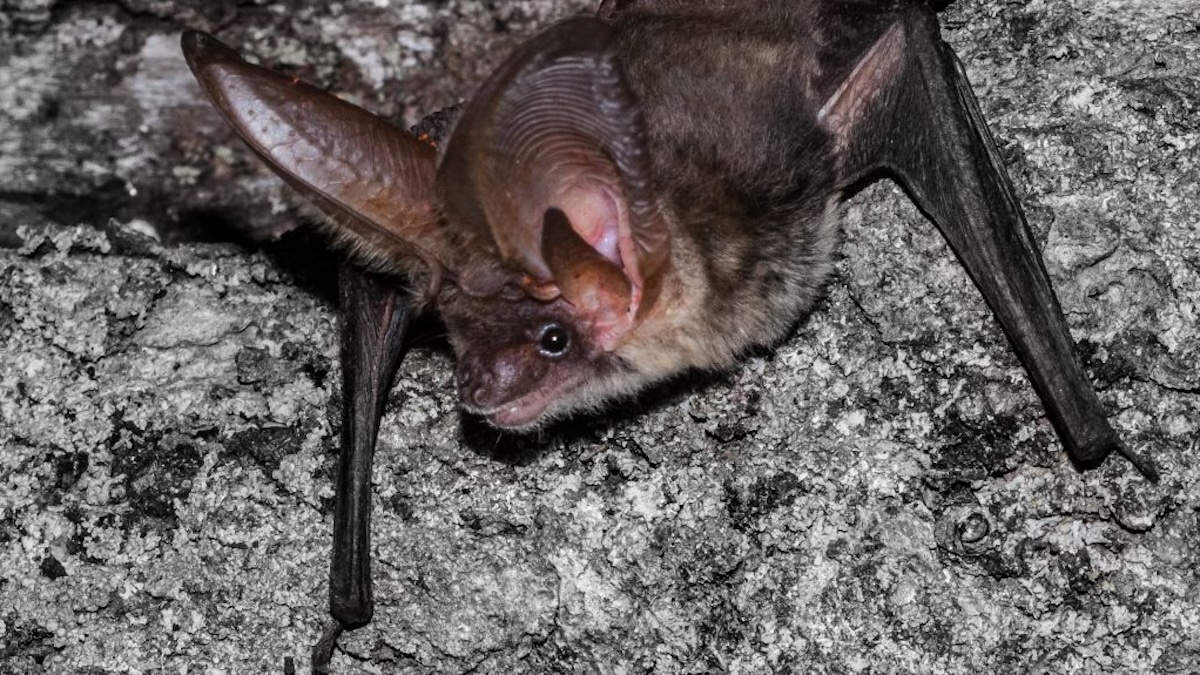
    A grey long-eared bat (Plecotus austriacus), one of the species that the study investigated
    A grey long-eared bat (Plecotus austriacus), one of the species that the study investigated. Adrià López-Baucells
    Why you can trust us

    Founded in 2005 as an Ohio-based environmental newspaper, EcoWatch is a digital platform dedicated to publishing quality, science-based content on environmental issues, causes, and solutions.

    Facebook icon Twitter icon Pinterest icon Email icon

    April 17 is International Bat Appreciation Day! In celebration of these sometimes unsung nocturnal pollinators, a new study has demonstrated how bats can be allies of agriculture, as they feed on important crop “pests.”

    The researchers found that encouraging bats can be beneficial for conservation efforts, as well as local farmers, a press release from University of Oxford said.

    “Bats often get a bad rap. Our study highlights their significance, revealing that while their nocturnal habits and secretive lifestyle make them elusive to many, insectivorous bats play a crucial role in the ecosystems they inhabit and, through the ecosystem services they provide, they can help humans in multiple ways,” said co-author of the study Dr. Ricardo Rocha, an associate professor in the biology department at University of Oxford, in the press release.

    Because of bats’ ability to fly, they have colonized a variety of oceanic islands, including Portugal’s sub-tropical Madeira, and their presence has been beneficial for the island’s farmers.

    About one-fifth of mammal species are bats. They play an especially vital role in island ecosystems, since these environments usually have much fewer mammals than mainland habitats. However, the diets of island-dwelling bats have traditionally been understudied.

    The research team looked at three bat species living on the island of Madeira — the Madeira Lesser Noctule (Nyctalus leisleri verrucosus), the Madeira Pipistrelle (Pipistrellus maderensis) and the Grey Long-eared Bat (Plecotus austriacus).

    The team collected droppings from more than 100 individual bats, then extracted DNA from their feces to determine what they were eating. The researchers found that the diets of all three bat species were highly diverse. They ate more than 50 distinct species between them, including flies, beetles, butterflies, moths and spiders. Of the identified species, 40 percent were either likely or confirmed forestry or agricultural pests.

    “We anticipated that all three species would primarily feed on nocturnal butterflies; however, we did not expect that over 40% of the species detected in the bats’ diet are likely or confirmed agricultural or forestry pests,” said the study’s lead author Angelina Gonçalves of the University of Porto in Portugal in the press release.

    The research team discovered that the bats consumed a well-known agricultural pest, the banana moth (Opogona sacchari), which impacts banana trees, an economically important local crop.

    More From EcoWatch
    • The Best Solar Panels for Farming
    • The Best Off-Grid Solar Systems
    • How to Fix Underperforming Solar Panels

    The bats also feasted upon insects such as golden twin-spot moths (Chrysodeixis chalcites) and turnip moths, who frequently damage cereals and vegetables. Bats also ate a human parasite called Psychoda albipennis, which causes urogenital myiasis, leading to burning sensations, abdominal pain and diarrhea.

    The study, “A metabarcoding assessment of the diet of the insectivorous bats of Madeira Island, Macaronesia,” was published in the Journal of Mammalogy.

    Collecting the bats was challenging for the researchers at first, as it involved the use of mist nets to capture and hold them until the collection of their fecal samples. Through their use of echolocation, the bats were initially able to easily avoid the nets.

    “Fortunately, we discovered that the bats lowered their guard when they came to drink so we changed tactics slightly and waited at strategic water points,” Gonçalves explained. “In this way, we were then able to capture enough individuals to conduct our research.”

    The expansion of agriculture is one of the biggest causes of biodiversity loss globally, but some species like bats are able to exploit its resources. The study shows that encouraging bats can benefit  conservation while supporting island farming communities.

    “An increasing number of farmers are using bat boxes to attract insectivorous bats to their fields,” Rocha said. “During our study, we experimented by placing some in the protected area where we were working, and to our excitement, some of these are now inhabited by the vulnerable Madeiran Pipistrelles. This suggests that deploying simple artificial bat roosts might lead to win-win outcomes for both conservation and local farmers.”

    Subscribe to get exclusive updates in our daily newsletter!

      By signing up, you agree to the Terms of Use and Privacy Policy, and to receive electronic communications from EcoWatch Media Group, which may include marketing promotions, advertisements and sponsored content.

      Cristen Hemingway Jaynes

      Cristen is a writer of fiction and nonfiction. She holds a JD and an Ocean & Coastal Law Certificate from University of Oregon School of Law and an MA in Creative Writing from Birkbeck, University of London. She is the author of the short story collection The Smallest of Entryways, as well as the travel biography, Ernest’s Way: An International Journey Through Hemingway’s Life.
      Facebook icon Twitter icon Pinterest icon Email icon

      Read More

      Methane 101: Understanding the Second Most Important Greenhouse Gas
      By Olivia Rosane and Cristen Hemingway Jaynes
      By EcoWatch
      New York Finalizes Rule for New Buildings to Be Electric
      New York is now the first state in the U.S.
      By Paige Bennett
      Mass Die-Off of Western Monarch Butterflies Linked to Pesticides, Study Finds
      A new peer-reviewed study has linked pesticides as a likely
      By Paige Bennett

      Subscribe to get exclusive updates in our daily newsletter!

        By signing up, you agree to the Terms of Use and Privacy Policy, and to receive electronic communications from EcoWatch Media Group, which may include marketing promotions, advertisements and sponsored content.

        Latest Articles

        • Methane 101: Understanding the Second Most Important Greenhouse Gas
          by EcoWatch
          August 5, 2025
        • New York Finalizes Rule for New Buildings to Be Electric
          by Paige Bennett
          August 4, 2025
        • Mass Die-Off of Western Monarch Butterflies Linked to Pesticides, Study Finds
          by Paige Bennett
          August 1, 2025
        • Deepest-Known Animal Communities Found Almost Six Miles Below Sea Level
          by Cristen Hemingway Jaynes
          August 1, 2025
        • Pristine Forest and Endangered Gorilla Habitat at Risk as Half of DRC Opened to Bids for Oil and Gas Drilling: Report
          by Cristen Hemingway Jaynes
          July 31, 2025
        • Global Hunger Fell Overall in 2024, but Rose in Africa and Western Asia as Climate and Conflict Threaten Progress: UN Report
          by Cristen Hemingway Jaynes
          July 30, 2025
        • Probiotic Found to Slow Disease Spread Among Florida Coral
          by Paige Bennett
          July 29, 2025
        • Earth Overshoot Day Reaches Record for Earliest Date
          by Paige Bennett
          July 28, 2025
        EcoWatch

        The best of EcoWatch right in your inbox. Sign up for our email newsletter!

          • Climate Climate
          • Animals Animals
          • Health + Wellness Health + Wellness
          • Insights + Opinion Insights + Opinion
          • Adventure Adventure
          • Oceans Oceans
          • Business Business
          • Solar Solar
          • About EcoWatch
          • Contact EcoWatch
          • EcoWatch Reviews
          • Terms of Use
          • Privacy Policy
          • Learn About Solar Energy
          • Learn About Deregulated Energy
          • EcoWatch UK
          Follow Us
          Facebook 558k
          Twitter 222k
          Instagram 52k
          Subscribe Subscribe

          Experts for a healthier planet and life.

          Mentioned by:
          Learn more
          • Privacy Policy
          • Terms of Use
          • Cookie Preferences
          • Do Not Sell My Information
          © 2026 EcoWatch. All Rights Reserved.

          Advertiser Disclosure

          Our editorial team is committed to creating independent and objective content focused on helping our readers make informed decisions. To help support these efforts we receive compensation from companies that advertise with us.

          The compensation we receive from these companies may impact how and where products appear on this site. This compensation does not influence the recommendations or advice our editorial team provides within our content. We do not include all companies, products or offers that may be available.