

EcoWatch
Facebook 558k Twitter 222k Instagram 52k Subscribe Subscribe
  • Climate
  • Energy
  • Conservation
  • Food + Agriculture
  • Renewables
  • Oceans
  • Policy
  • Insights + Opinion
  • Go Solar Today
      • Top Companies By State
        • California Solar Companies
        • Texas Solar Companies
        • New York Solar Companies
        • Florida Solar Companies
        • See All States
      • Top Incentives By State
        • California Solar Incentives
        • Texas Solar Incentives
        • New York Solar Incentives
        • Florida Solar Incentives
        • See All States
      • Solar Panel Costs By State
        • Solar Panel Costs in California
        • Solar Panel Costs in Texas
        • Solar Panel Costs in New York
        • Solar Panel Costs in Florida
        • See All States
      • Value of Solar by State
        • Is Solar Worth It In California?
        • Is Solar Worth It in Texas?
        • Is Solar Worth It New York?
        • Is Solar Worth It In Florida?
        • See All States
      • Company Reviews
        • Tesla Solar Review
        • Sunrun Solar Review
        • SunPower Solar Review
        • Vivint Solar Review
        • See All Companies
      • Common Solar Questions
        • Can You Get Free Solar Panels?
        • Does Solar Increase Home Value?
        • What’re The Best Solar Batteries?
        • Can You Finance Solar?
        • Where To Buy Solar Panels?
        • Payback On Solar Panels?
      • Solar Resources
        • Interactive Solar Calculator
        • Federal Solar Tax Credit
        • Best Solar Panels For Most Homes
        • Tesla Solar Roof Review
        • Cheapest Solar Panels
      • Companies Compared
        • SunPower vs Tesla Solar
        • SunRun vs Tesla Solar
        • SunRun vs SunPower
        • SunPower vs Momentum Solar
        • SunPower vs ADT Solar
EcoWatch
  • Climate
  • Energy
  • Conservation
  • Food + Agriculture
  • Renewables
  • Oceans
  • Policy
  • Insights + Opinion
  • Go Solar Today
    • Go Solar Today
    • Top Companies By State
      • California Solar Companies
      • Texas Solar Companies
      • New York Solar Companies
      • Florida Solar Companies
      • See All States
    • Top Incentives By State
      • California Solar Incentives
      • Texas Solar Incentives
      • New York Solar Incentives
      • Florida Solar Incentives
      • See All States
    • Solar Panel Costs By State
      • Solar Panel Costs in California
      • Solar Panel Costs in Texas
      • Solar Panel Costs in New York
      • Solar Panel Costs in Florida
      • See All States
    • Value of Solar by State
      • Is Solar Worth It In California?
      • Is Solar Worth It in Texas?
      • Is Solar Worth It New York?
      • Is Solar Worth It In Florida?
      • See All States
    • Company Reviews
      • Tesla Solar Review
      • Sunrun Solar Review
      • SunPower Solar Review
      • Vivint Solar Review
      • See All Companies
    • Common Solar Questions
      • Can You Get Free Solar Panels?
      • Does Solar Increase Home Value?
      • What’re The Best Solar Batteries?
      • Can You Finance Solar?
      • Where To Buy Solar Panels?
      • Payback On Solar Panels?
    • Solar Resources
      • Interactive Solar Calculator
      • Federal Solar Tax Credit
      • Best Solar Panels For Most Homes
      • Tesla Solar Roof Review
      • Cheapest Solar Panels
    • Companies Compared
      • SunPower vs Tesla Solar
      • SunRun vs Tesla Solar
      • SunRun vs SunPower
      • SunPower vs Momentum Solar
      • SunPower vs ADT Solar

The best of EcoWatch right in your inbox. Sign up for our email newsletter!

    • About EcoWatch
    • Contact EcoWatch
    • Terms of Use
    • Privacy Policy
    • Learn About Solar Energy
    Facebook 558k Twitter 222k Instagram 52k
    EcoWatch
    • About EcoWatch
    • Contact EcoWatch
    • Terms of Use
    • Privacy Policy
    • Learn About Solar Energy
    Facebook 558k Twitter 222k Instagram 52k
    Home Culture

    ‘We Have Just Arrived’: Author Rick Bass on Writing and Activism in Montana

    By: Craig Thompson
    Published: March 8, 2024
    Edited by Chris McDermott
    Facebook icon Twitter icon Pinterest icon Email icon
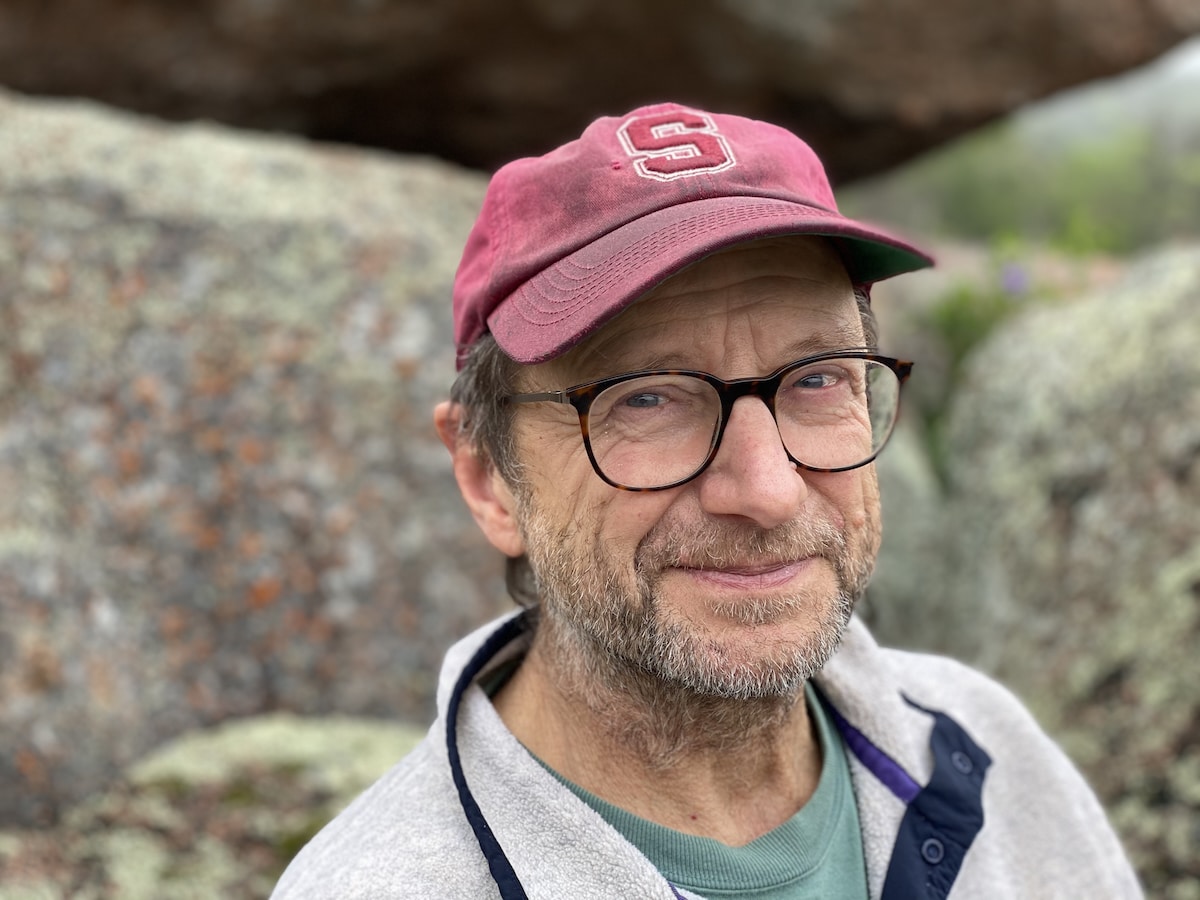
    Rick Bass author photo by Carter Walker
    Rick Bass author photo by Carter Walker
    Why you can trust us

    Founded in 2005 as an Ohio-based environmental newspaper, EcoWatch is a digital platform dedicated to publishing quality, science-based content on environmental issues, causes, and solutions.

    Facebook icon Twitter icon Pinterest icon Email icon

    Rick Bass is an American author of more than thirty books, both fiction and non-fiction, on a wide range of topics. An environmental activist, he is also an artist drawn to the beauty of the natural world. The winner of numerous awards, his most recent essay collection, With Every Great Breath, was released this February by Counterpoint Press and includes three new essays along with a selection of eighteen written over nearly three decades.
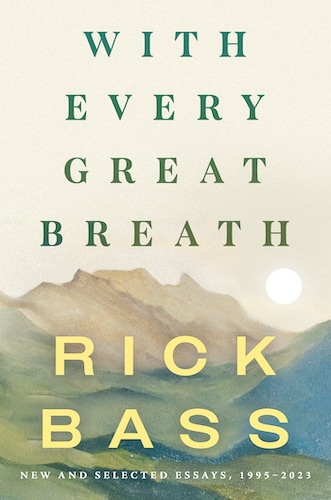
    Counterpoint Press

    Bass is based in the Yaak Valley in Montana. “It’s a land of extremes and superlatives,” he says. Through the Yaak Valley Forest Council, Bass and a group of locals work to preserve the valley from logging, and are also trying to convince the U.S. Forest Service to reroute the Pacific Northwest Trail away from grizzly bear habitat, of which there are only 25 remaining in the Yaak. He’s also involved in a campaign to make the Yaak a climate refuge. The following are excerpts from a conversation with him from his home in Montana, as he was making a chili dinner.

    What makes the Yaak Valley special? 

    Its uniqueness, its singularity, is its duality, essentially a paradox. It’s two things – the major ecosystem driver is rocks, and yet because we’re at the edge of the Rocky Mountains, a major landscape driver is also fire. There is an extraordinary amount of biological diversity here. Twenty-five percent of the state of Montana’s list of sensitive species are found in this one national forest a long way up in the northwest corner. It’s the wettest place in Montana, it’s the lowest elevation, it’s the northernmost. 

    Why should the Yaak Valley be considered a climate refuge? (Bass recently wrote about this here.) 

    It’s a place to preserve this incredible habitat and diversity to buy some time and try to slow the rate of climate change. That’s where the advocacy for the old forests comes in. Historically, the Yaak was as much as 50 percent old growth, and now there’s only about 10 percent old growth. Old growth is an incredible mechanism for storing carbon for long-term safe keeping. The climate refuge would be an experiment in what that would look like – how would you go about returning the landscape to its historic range of variability of old and mature forest. 
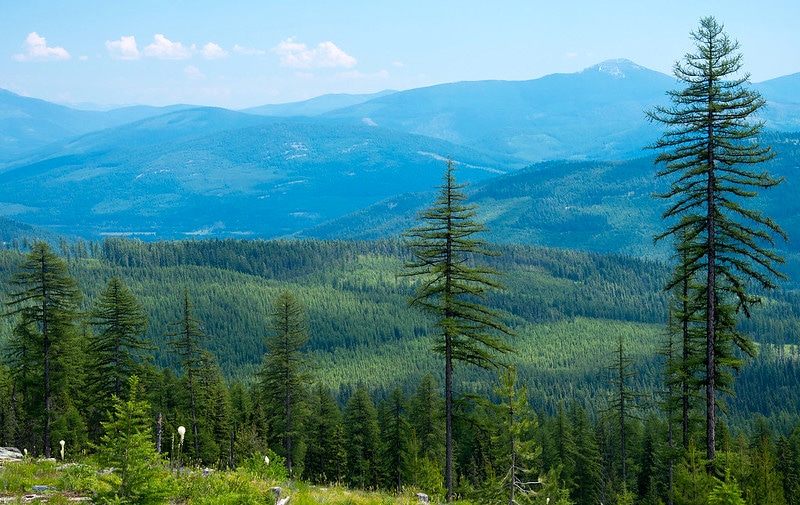
    The Yaak Valley from Garver Mountain, Kootenai National Forest, on July 9, 2012. U.S. Forest Service Pacific Northwest Region

    Where does that campaign stand right now? 

    All campaigns take a long time, but we’re proceeding at the local, state and national level. Everybody we talk to is enthused about the idea, but you know, government takes a good while to enact it. There’s about a hundred million acres of old and mature forests on public land around the U.S., so our quarter-million acre proposal is pretty small. 

    How do you look at activism now, not only for you but for others, as opposed to 20, 30, 40 years ago? 

    With the passage of time, as populations grow and resource pressures accrue, it gets harder and harder to feel that one person can make a difference, or that even a group of people can make a difference. As an activist and as an artist, it’s really important for me to try to find means and mechanisms for which people can feel engaged. There’s a lot of donor fatigue out there. It might take more creativity to become a successful advocate now than in the past. That’s my experience, anyways. 

    The title piece is about the past and the future of pollutants and activism. (The essay discusses the devastating health impact of the mining of vermiculite from Montana.) Where are we headed? Are pollutants getting worse, are the problems getting worse? 

    When I started working on that, it was hyper-specific and intensely local. One of the least populated parts of western Montana, one of the largest geographic areas and counties in the state of Montana. Again, I guess a common theme was out of sight from the public eye. The elimination of truth that reporting can bring to any issue. Anybody who’s got their head out of the sand and is looking around at the world is, I think, aware of the good and evil battle between the two major political parties in this country, trying to determine whether those things be regulated and accounted and monitored, or not, and it is, along with climate change, the battle of our time. 

    You write in a new essay, “Who knows how we come to things?” Would you say that you come to things by looking out the window? 

    When I’m writing, I am looking out the window, but when I’m writing I am engaging with my experience with the five senses, the physical world and my experience in it. I’m really fortunate to live here in such a singular landscape, where a lot of those experiences are singular, so it’s a great place to be a thinker as well as an activist. 

    You worked as an oil and gas geologist in Mississippi before moving west. When you first moved from those areas to Montana, were you struck by that part of the world? 

    I did not move to Montana intending to tell people what Montana was like. I moved to Montana because I missed the west. After that first year in the valley in 1987, I realized what was being lost, and the rate it was being lost, and the violence with which it was being lost. And I thought, I’ll stop writing fiction for a little while and I’ll spend some time writing about what’s going on out here. It’s been 37 years. 

    You’ve written about dogs, caribou, rhinos. What about animals appeals to you as a writer and a person living in the world? 

    What impresses me about animals, whether domesticated or undomesticated, is the degree of their fittedness to the world. They’ve been here a lot longer than our own species, and they have learned to accommodate with power and grace, the world. And we are still working at it. I am never around them without experiencing amazement, admiration, respect. We have a long way to go. We just got here. 

    What about the Anthropocene? What is your thought on that? 

    We have just arrived here. Rather than learning to fit the world and integrate gracefully and with connection to all of the rest of the world, we seem to have skated past that step in development, and are simply attempting to shape it to our desires without the deep engagement of knowledge. And the consequences are writ large in the script of misery. 

    What do you think the final extraction might look like? When the final drop of oil, or the final piece of coal is taken out of the ground? What would that moment be like? 

    There’s a line that comes to mind from Peter Matthiessen in his first book of his trilogy, about a poacher in the Everglades. A client was asking where he could procure some rare feather… The poacher studied on it and answered with some regret, Well, I believe all of those pretty little birds have done flown away. I think that would be the response to the last barrel of oil or last turn of coal taken. I believe it’s all gone away. You know, with absolute lack of ownership in the leave-taking. 

    View this post on Instagram

    A post shared by Yaak Valley Forest Council (@yaakvalleyforestcouncil)

    Subscribe to get exclusive updates in our daily newsletter!

      By signing up, you agree to the Terms of Use and Privacy Policy, and to receive electronic communications from EcoWatch Media Group, which may include marketing promotions, advertisements and sponsored content.

      Craig Thompson

      Craig Thompson is a freelance writer interested in the intersection of tech, policy and human ingenuity on the future landscape of energy and climate change. He’s written for Venture Beat, Xconomy, the Village Voice, and PopMatters. He holds a graduate degree in journalism from the Craig Newmark Graduate School of Journalism.
      Facebook icon Twitter icon Pinterest icon Email icon

      Read More

      Methane 101: Understanding the Second Most Important Greenhouse Gas
      By Olivia Rosane and Cristen Hemingway Jaynes
      By EcoWatch
      New York Finalizes Rule for New Buildings to Be Electric
      New York is now the first state in the U.S.
      By Paige Bennett
      Mass Die-Off of Western Monarch Butterflies Linked to Pesticides, Study Finds
      A new peer-reviewed study has linked pesticides as a likely
      By Paige Bennett

      Subscribe to get exclusive updates in our daily newsletter!

        By signing up, you agree to the Terms of Use and Privacy Policy, and to receive electronic communications from EcoWatch Media Group, which may include marketing promotions, advertisements and sponsored content.

        Latest Articles

        • Methane 101: Understanding the Second Most Important Greenhouse Gas
          by EcoWatch
          August 5, 2025
        • New York Finalizes Rule for New Buildings to Be Electric
          by Paige Bennett
          August 4, 2025
        • Mass Die-Off of Western Monarch Butterflies Linked to Pesticides, Study Finds
          by Paige Bennett
          August 1, 2025
        • Deepest-Known Animal Communities Found Almost Six Miles Below Sea Level
          by Cristen Hemingway Jaynes
          August 1, 2025
        • Pristine Forest and Endangered Gorilla Habitat at Risk as Half of DRC Opened to Bids for Oil and Gas Drilling: Report
          by Cristen Hemingway Jaynes
          July 31, 2025
        • Global Hunger Fell Overall in 2024, but Rose in Africa and Western Asia as Climate and Conflict Threaten Progress: UN Report
          by Cristen Hemingway Jaynes
          July 30, 2025
        • Probiotic Found to Slow Disease Spread Among Florida Coral
          by Paige Bennett
          July 29, 2025
        • Earth Overshoot Day Reaches Record for Earliest Date
          by Paige Bennett
          July 28, 2025
        EcoWatch

        The best of EcoWatch right in your inbox. Sign up for our email newsletter!

          • Climate Climate
          • Animals Animals
          • Health + Wellness Health + Wellness
          • Insights + Opinion Insights + Opinion
          • Adventure Adventure
          • Oceans Oceans
          • Business Business
          • Solar Solar
          • About EcoWatch
          • Contact EcoWatch
          • EcoWatch Reviews
          • Terms of Use
          • Privacy Policy
          • Learn About Solar Energy
          • Learn About Deregulated Energy
          • EcoWatch UK
          Follow Us
          Facebook 558k
          Twitter 222k
          Instagram 52k
          Subscribe Subscribe

          Experts for a healthier planet and life.

          Mentioned by:
          Learn more
          • Privacy Policy
          • Terms of Use
          • Your Privacy Choices California Consumer Privacy Act (CCPA) Opt-Out Icon
          © 2026 EcoWatch. All Rights Reserved.

          Advertiser Disclosure

          Our editorial team is committed to creating independent and objective content focused on helping our readers make informed decisions. To help support these efforts we receive compensation from companies that advertise with us.

          The compensation we receive from these companies may impact how and where products appear on this site. This compensation does not influence the recommendations or advice our editorial team provides within our content. We do not include all companies, products or offers that may be available.