

EcoWatch
Facebook 558k Twitter 222k Instagram 52k Subscribe Subscribe
  • Climate
  • Energy
  • Conservation
  • Food + Agriculture
  • Renewables
  • Oceans
  • Policy
  • Insights + Opinion
  • Go Solar Today
      • Top Companies By State
        • California Solar Companies
        • Texas Solar Companies
        • New York Solar Companies
        • Florida Solar Companies
        • See All States
      • Top Incentives By State
        • California Solar Incentives
        • Texas Solar Incentives
        • New York Solar Incentives
        • Florida Solar Incentives
        • See All States
      • Solar Panel Costs By State
        • Solar Panel Costs in California
        • Solar Panel Costs in Texas
        • Solar Panel Costs in New York
        • Solar Panel Costs in Florida
        • See All States
      • Value of Solar by State
        • Is Solar Worth It In California?
        • Is Solar Worth It in Texas?
        • Is Solar Worth It New York?
        • Is Solar Worth It In Florida?
        • See All States
      • Company Reviews
        • Tesla Solar Review
        • Sunrun Solar Review
        • SunPower Solar Review
        • Vivint Solar Review
        • See All Companies
      • Common Solar Questions
        • Can You Get Free Solar Panels?
        • Does Solar Increase Home Value?
        • What’re The Best Solar Batteries?
        • Can You Finance Solar?
        • Where To Buy Solar Panels?
        • Payback On Solar Panels?
      • Solar Resources
        • Interactive Solar Calculator
        • Federal Solar Tax Credit
        • Best Solar Panels For Most Homes
        • Tesla Solar Roof Review
        • Cheapest Solar Panels
      • Companies Compared
        • SunPower vs Tesla Solar
        • SunRun vs Tesla Solar
        • SunRun vs SunPower
        • SunPower vs Momentum Solar
        • SunPower vs ADT Solar
EcoWatch
  • Climate
  • Energy
  • Conservation
  • Food + Agriculture
  • Renewables
  • Oceans
  • Policy
  • Insights + Opinion
  • Go Solar Today
    • Go Solar Today
    • Top Companies By State
      • California Solar Companies
      • Texas Solar Companies
      • New York Solar Companies
      • Florida Solar Companies
      • See All States
    • Top Incentives By State
      • California Solar Incentives
      • Texas Solar Incentives
      • New York Solar Incentives
      • Florida Solar Incentives
      • See All States
    • Solar Panel Costs By State
      • Solar Panel Costs in California
      • Solar Panel Costs in Texas
      • Solar Panel Costs in New York
      • Solar Panel Costs in Florida
      • See All States
    • Value of Solar by State
      • Is Solar Worth It In California?
      • Is Solar Worth It in Texas?
      • Is Solar Worth It New York?
      • Is Solar Worth It In Florida?
      • See All States
    • Company Reviews
      • Tesla Solar Review
      • Sunrun Solar Review
      • SunPower Solar Review
      • Vivint Solar Review
      • See All Companies
    • Common Solar Questions
      • Can You Get Free Solar Panels?
      • Does Solar Increase Home Value?
      • What’re The Best Solar Batteries?
      • Can You Finance Solar?
      • Where To Buy Solar Panels?
      • Payback On Solar Panels?
    • Solar Resources
      • Interactive Solar Calculator
      • Federal Solar Tax Credit
      • Best Solar Panels For Most Homes
      • Tesla Solar Roof Review
      • Cheapest Solar Panels
    • Companies Compared
      • SunPower vs Tesla Solar
      • SunRun vs Tesla Solar
      • SunRun vs SunPower
      • SunPower vs Momentum Solar
      • SunPower vs ADT Solar

The best of EcoWatch right in your inbox. Sign up for our email newsletter!

    • About EcoWatch
    • Contact EcoWatch
    • Terms of Use
    • Privacy Policy
    • Learn About Solar Energy
    Facebook 558k Twitter 222k Instagram 52k
    EcoWatch
    • About EcoWatch
    • Contact EcoWatch
    • Terms of Use
    • Privacy Policy
    • Learn About Solar Energy
    Facebook 558k Twitter 222k Instagram 52k
    Home Food and Agriculture

    Grocery Chains to Ban Use of Neonics by Suppliers, in Move to Protect Pollinators

    By: Paige Bennett
    Published: February 21, 2024
    Edited by Chris McDermott
    Facebook icon Twitter icon Pinterest icon Email icon
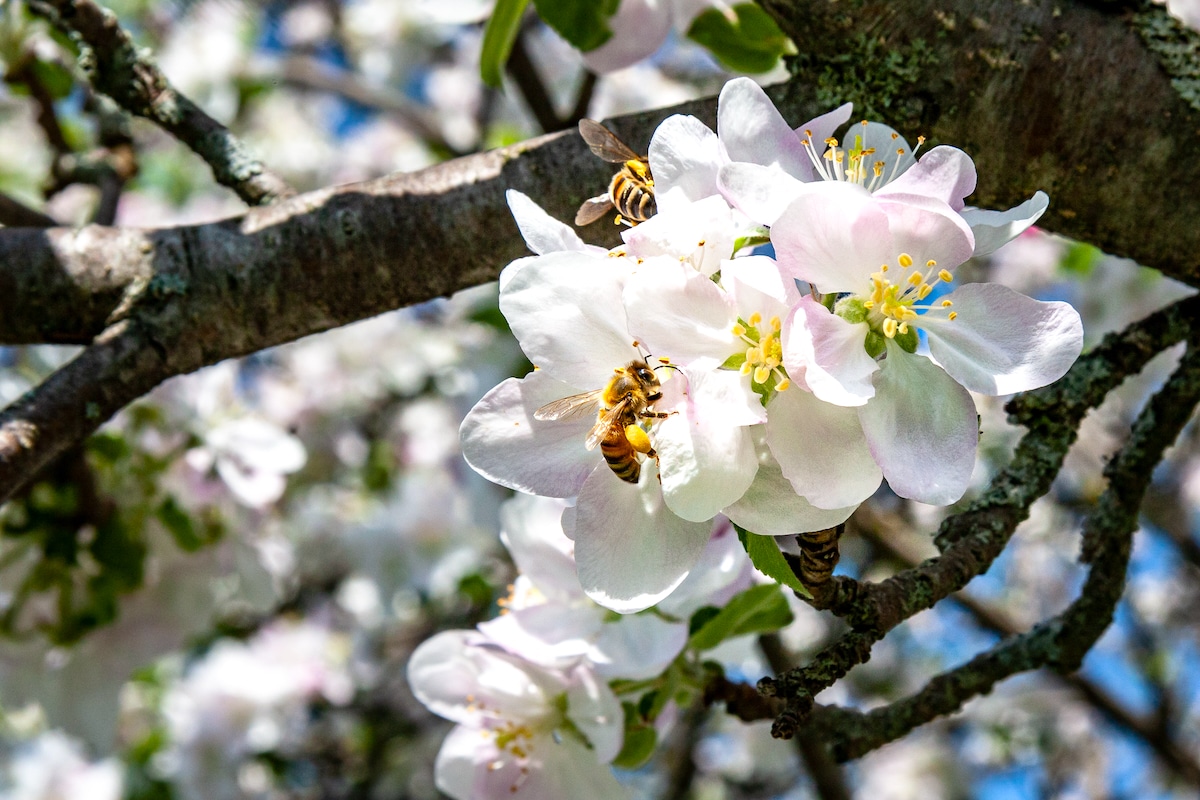
    Honeybees pollinating the flowers of an apple tree
    Honeybees pollinating the flowers of an apple tree. MichelGuenette / iStock / Getty Images Plus
    Why you can trust us

    Founded in 2005 as an Ohio-based environmental newspaper, EcoWatch is a digital platform dedicated to publishing quality, science-based content on environmental issues, causes, and solutions.

    Facebook icon Twitter icon Pinterest icon Email icon

    Some grocery chains are moving to help protect pollinators by requiring their suppliers to stop using nitroguanidine neonicotinoids, or neonics.

    Chains including Whole Foods and Kroger have recently outlined policies that will ban the use of neonics in crop production. Whole Foods’ policy also applies to its floral department.

    According to the Whole Foods policy, announced in 2023, fresh produce and floral supplies will be required to use integrated pest management (IPM) to reduce chemical pesticide use starting in 2025. The company said it is also encouraging suppliers to phase out neonics, and neonics will be banned by suppliers of potted plants in the store.

    Kroger’s policy, announced in 2024, will also require suppliers to use an IPM system with tiered deadlines based on farm size. Growers with mid- to large-sized farms will need to meet a 2028 deadline, while small farms have until 2030 to make the change.

    “We depend on a healthy and resilient agriculture supply chain to keep bringing fresh, affordable food to more of America,” Lisa Zwack, head of sustainability for Kroger, said in a press release. “This new goal reflects Kroger’s evolving approach to sustainability and resource conservation, including setting clear expectations with growers to support the transition to more sustainable fresh food production.”

    Nitroguanidine neonicotinoids include chemicals such as clothianidin, dinotefuran, imidacloprid and thiamethoxam, and neonics are the most popular insecticide used in the U.S., according to the Natural Resources Defense Council (NRDC). While neonics may be used to target certain insects that can destroy crops, they can become present on plants, including in their pollen and nectar. From there, pollinators like bees and butterflies are exposed to the neonics. 

    They work by attacking the nervous system in insects, leading to paralysis and death in higher doses. At smaller doses, NRDC reported that these pesticides can still weaken the immune system, memory, stamina and reproduction of insects and keep pollinators from pollinating crops.

    “Every single piece of fruit we grow requires pollination,” said Mark Zirkle, president of Rainier Fruit, which supplies food to Whole Foods, as reported by GreenBiz. “We wouldn’t have a crop without honeybees, so pollinator health is of utmost importance to us as farmers.”

    More From EcoWatch
    • The Best Solar Panels for Farming
    • What Are Off-Grid Solar Panel Systems?
    • The Best Solar-Powered Water Pumps

    Because neonics remain in the soil for a long time after application, they can affect other wildlife and can run off, leading to widespread contamination.

    Both Whole Foods and Kroger have outlined several certifications that growers can earn to comply with the new policies. Some of these certifications include Biodynamic, Fair Trade International, Fair Trade USA, Rainforest Alliance, Regenerative Organic Certified (ROC) and USDA Organic (or international equivalents). Whole Foods specifically recommends Equitable Food Initiative (EFI) and Bee Better certifications for their “strong IPM and neonicotinoid restrictions.”

    As Friends of the Earth reported, thirteen grocery chains and food retailers in the U.S. have developed pollinator policies since 2018. Walmart has a policy requiring third-party verification of IPM practices for suppliers to take effect in 2025, Giant Eagle will ban the use of neonics by its fresh produce suppliers starting 2025, and the Albertsons policy recommends, but doesn’t require, suppliers to limit or phase-out pesticides, including neonics. 

    “We now understand that biodiversity collapse is as pressing a threat to planetary health and our food supply as climate change. And the over 1 billion pounds of pesticides used annually in U.S. agriculture are drivers of both,” said Kendra Klein, deputy director of science at Friends of the Earth. “It’s past time for U.S. food retailers to take swift action to eliminate the use of toxic pesticides in their supply chains and speed the transition to organic and other ecologically regenerative approaches to agriculture. Despite this promising industry trend, efforts fall far short of what is needed to protect pollinators, people, and the planet from toxic pesticides.”

    Subscribe to get exclusive updates in our daily newsletter!

      By signing up, you agree to the Terms of Use and Privacy Policy, and to receive electronic communications from EcoWatch Media Group, which may include marketing promotions, advertisements and sponsored content.

      Paige Bennett

      Based in Los Angeles, Paige is a writer who is passionate about sustainability. She earned her Bachelor’s degree in Journalism from Ohio University and holds a certificate in Women’s, Gender and Sexuality Studies. She also specialized in sustainable agriculture while pursuing her undergraduate degree.
      Facebook icon Twitter icon Pinterest icon Email icon

      Read More

      Methane 101: Understanding the Second Most Important Greenhouse Gas
      By Olivia Rosane and Cristen Hemingway Jaynes
      By EcoWatch
      New York Finalizes Rule for New Buildings to Be Electric
      New York is now the first state in the U.S.
      By Paige Bennett
      Mass Die-Off of Western Monarch Butterflies Linked to Pesticides, Study Finds
      A new peer-reviewed study has linked pesticides as a likely
      By Paige Bennett

      Subscribe to get exclusive updates in our daily newsletter!

        By signing up, you agree to the Terms of Use and Privacy Policy, and to receive electronic communications from EcoWatch Media Group, which may include marketing promotions, advertisements and sponsored content.

        Latest Articles

        • Methane 101: Understanding the Second Most Important Greenhouse Gas
          by EcoWatch
          August 5, 2025
        • New York Finalizes Rule for New Buildings to Be Electric
          by Paige Bennett
          August 4, 2025
        • Mass Die-Off of Western Monarch Butterflies Linked to Pesticides, Study Finds
          by Paige Bennett
          August 1, 2025
        • Deepest-Known Animal Communities Found Almost Six Miles Below Sea Level
          by Cristen Hemingway Jaynes
          August 1, 2025
        • Pristine Forest and Endangered Gorilla Habitat at Risk as Half of DRC Opened to Bids for Oil and Gas Drilling: Report
          by Cristen Hemingway Jaynes
          July 31, 2025
        • Global Hunger Fell Overall in 2024, but Rose in Africa and Western Asia as Climate and Conflict Threaten Progress: UN Report
          by Cristen Hemingway Jaynes
          July 30, 2025
        • Probiotic Found to Slow Disease Spread Among Florida Coral
          by Paige Bennett
          July 29, 2025
        • Earth Overshoot Day Reaches Record for Earliest Date
          by Paige Bennett
          July 28, 2025
        EcoWatch

        The best of EcoWatch right in your inbox. Sign up for our email newsletter!

          • Climate Climate
          • Animals Animals
          • Health + Wellness Health + Wellness
          • Insights + Opinion Insights + Opinion
          • Adventure Adventure
          • Oceans Oceans
          • Business Business
          • Solar Solar
          • About EcoWatch
          • Contact EcoWatch
          • EcoWatch Reviews
          • Terms of Use
          • Privacy Policy
          • Learn About Solar Energy
          • Learn About Deregulated Energy
          • EcoWatch UK
          Follow Us
          Facebook 558k
          Twitter 222k
          Instagram 52k
          Subscribe Subscribe

          Experts for a healthier planet and life.

          Mentioned by:
          Learn more
          • Privacy Policy
          • Terms of Use
          • Your Privacy Choices California Consumer Privacy Act (CCPA) Opt-Out Icon
          © 2026 EcoWatch. All Rights Reserved.

          Advertiser Disclosure

          Our editorial team is committed to creating independent and objective content focused on helping our readers make informed decisions. To help support these efforts we receive compensation from companies that advertise with us.

          The compensation we receive from these companies may impact how and where products appear on this site. This compensation does not influence the recommendations or advice our editorial team provides within our content. We do not include all companies, products or offers that may be available.