

EcoWatch
Facebook 558k Twitter 222k Instagram 52k Subscribe Subscribe
  • Climate
  • Energy
  • Conservation
  • Food + Agriculture
  • Renewables
  • Oceans
  • Policy
  • Insights + Opinion
  • Go Solar Today
      • Top Companies By State
        • California Solar Companies
        • Texas Solar Companies
        • New York Solar Companies
        • Florida Solar Companies
        • See All States
      • Top Incentives By State
        • California Solar Incentives
        • Texas Solar Incentives
        • New York Solar Incentives
        • Florida Solar Incentives
        • See All States
      • Solar Panel Costs By State
        • Solar Panel Costs in California
        • Solar Panel Costs in Texas
        • Solar Panel Costs in New York
        • Solar Panel Costs in Florida
        • See All States
      • Value of Solar by State
        • Is Solar Worth It In California?
        • Is Solar Worth It in Texas?
        • Is Solar Worth It New York?
        • Is Solar Worth It In Florida?
        • See All States
      • Company Reviews
        • Tesla Solar Review
        • Sunrun Solar Review
        • SunPower Solar Review
        • Vivint Solar Review
        • See All Companies
      • Common Solar Questions
        • Can You Get Free Solar Panels?
        • Does Solar Increase Home Value?
        • What’re The Best Solar Batteries?
        • Can You Finance Solar?
        • Where To Buy Solar Panels?
        • Payback On Solar Panels?
      • Solar Resources
        • Interactive Solar Calculator
        • Federal Solar Tax Credit
        • Best Solar Panels For Most Homes
        • Tesla Solar Roof Review
        • Cheapest Solar Panels
      • Companies Compared
        • SunPower vs Tesla Solar
        • SunRun vs Tesla Solar
        • SunRun vs SunPower
        • SunPower vs Momentum Solar
        • SunPower vs ADT Solar
EcoWatch
  • Climate
  • Energy
  • Conservation
  • Food + Agriculture
  • Renewables
  • Oceans
  • Policy
  • Insights + Opinion
  • Go Solar Today
    • Go Solar Today
    • Top Companies By State
      • California Solar Companies
      • Texas Solar Companies
      • New York Solar Companies
      • Florida Solar Companies
      • See All States
    • Top Incentives By State
      • California Solar Incentives
      • Texas Solar Incentives
      • New York Solar Incentives
      • Florida Solar Incentives
      • See All States
    • Solar Panel Costs By State
      • Solar Panel Costs in California
      • Solar Panel Costs in Texas
      • Solar Panel Costs in New York
      • Solar Panel Costs in Florida
      • See All States
    • Value of Solar by State
      • Is Solar Worth It In California?
      • Is Solar Worth It in Texas?
      • Is Solar Worth It New York?
      • Is Solar Worth It In Florida?
      • See All States
    • Company Reviews
      • Tesla Solar Review
      • Sunrun Solar Review
      • SunPower Solar Review
      • Vivint Solar Review
      • See All Companies
    • Common Solar Questions
      • Can You Get Free Solar Panels?
      • Does Solar Increase Home Value?
      • What’re The Best Solar Batteries?
      • Can You Finance Solar?
      • Where To Buy Solar Panels?
      • Payback On Solar Panels?
    • Solar Resources
      • Interactive Solar Calculator
      • Federal Solar Tax Credit
      • Best Solar Panels For Most Homes
      • Tesla Solar Roof Review
      • Cheapest Solar Panels
    • Companies Compared
      • SunPower vs Tesla Solar
      • SunRun vs Tesla Solar
      • SunRun vs SunPower
      • SunPower vs Momentum Solar
      • SunPower vs ADT Solar

The best of EcoWatch right in your inbox. Sign up for our email newsletter!

    • About EcoWatch
    • Contact EcoWatch
    • Terms of Use
    • Privacy Policy
    • Learn About Solar Energy
    Facebook 558k Twitter 222k Instagram 52k
    EcoWatch
    • About EcoWatch
    • Contact EcoWatch
    • Terms of Use
    • Privacy Policy
    • Learn About Solar Energy
    Facebook 558k Twitter 222k Instagram 52k
    Home Health + Wellness

    Light Pollution Could Extend Biting Season for Mosquitoes, Increasing West Nile Risk

    By: Cristen Hemingway Jaynes
    Published: April 12, 2023
    Edited by Chris McDermott
    Facebook icon Twitter icon Pinterest icon Email icon
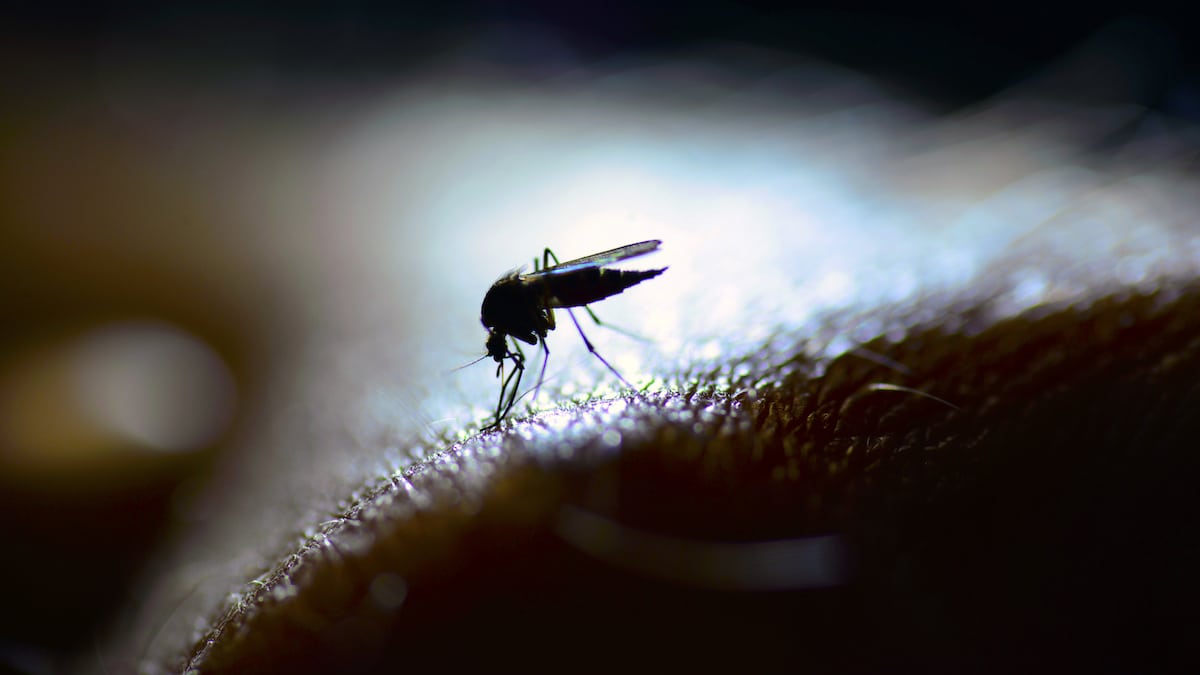
    A mosquito backlit by a LED lamp
    The winter dormancy period of mosquitoes that carry West Nile virus may be disrupted by urban light pollution. RolfAasa / E+ / Getty Images
    Why you can trust us

    Founded in 2005 as an Ohio-based environmental newspaper, EcoWatch is a digital platform dedicated to publishing quality, science-based content on environmental issues, causes, and solutions.

    Facebook icon Twitter icon Pinterest icon Email icon

    The increasing problem of light pollution can have negative effects on both humans and wildlife. In people, it can cause sleep deprivation, increased stress, headaches and even anxiety.

    Artificial light can attract animals like sea turtles, moths and frogs, leading them astray and making them more vulnerable to predators and exhaustion.

    A new study has found that the winter dormancy period of mosquitoes that carry West Nile virus may be disrupted by urban light pollution.

    More From EcoWatch
    • The Best Outdoor Solar Lights
    • The Best Solar Panels for Camping
    • The Best Solar Panels for Hot Climates

    This can cause mosquitoes to not survive the winter if they aren’t able to gain enough weight. It can also cause their dormancy period — called diapause — to be delayed, leading to a longer season of mosquito bites extending into the fall, Ohio State News reported.

    “We see the highest levels of West Nile virus transmission in the late summer and early fall in Ohio. If you have mosquitoes postponing or delaying diapause and continuing to be active longer in the year, that’s at a time when the mosquitoes are most likely to be infected with West Nile virus and people could be at greatest risk of contracting it,” said Megan Meuti, senior author of the study and an assistant professor of entomology at The Ohio State University, as reported by Ohio State News.

    This and other earlier studies by the researcher team — which consisted of first author Matthew Wolkoff and Lydia Fyie, both doctoral candidates in entomology at Ohio State — were some of the first to demonstrate the effects of artificial light on the behavior of mosquitoes.

    “We’re finding that the same urban light at night can have very different effects under different seasonal contexts,” Meuti said. 

    The study, “Light Pollution Disrupts Seasonal Differences in the Daily Activity and Metabolic Profiles of the Northern House Mosquito, Culex pipiens,” was published in the journal Insects.

    For female Northern house mosquitoes, diapause is a period of dormancy when the insects spend their time in semi-protected places like culverts, caves and sheds. Before winter arrives, mosquitoes convert plant nectar and other sugars into fat, but start to seek out blood sources to facilitate egg production as the days get longer.

    West Nile virus is transmitted when mosquitoes feed on infected birds and pass it along to mammals like people and horses.

    Meuti had previously found that diapausing and non-diapausing mosquitoes had different circadian clock genes, indicating that how long the days are dictates the start of diapause.

    More recently, Fyie and colleagues discovered that nighttime exposure of female mosquitoes to dim light led them to avert diapause and jump into reproductive activity, even during short winter days when they should be dormant.

    In the new study, the researchers reared mosquitoes in laboratory conditions of two different types — long days when the insects would usually be active (the scientists used artificial light at night) and short days when they became dormant (no artificial light was used). They then compared the mosquitoes’ nutrient accumulation and daily activity.

    The team discovered that the artificial light used at night affected the building up of nutrient reserves for the winter, as well as their patterns of activity.

    The light pollution had the effect of suppressing the amount of water-soluble carbohydrates, an essential source of sugars during the winter, that had been stored up by the mosquitoes in both types of laboratory conditions.

    Exposure to artificial light at night had the effect of reversing sugar accumulation patterns, so diapausing mosquitoes showed an increase in glycogen accumulation in their bodies, while non-dormant mosquitoes did not.

    Among the dormant mosquitoes, the research team’s observations showed a slight increase in activity due to the light at night, and indicated a slight suppression of activity among non-dormant mosquitoes who were expected to be searching for food sources.

    While those observations weren’t statistically significant, the observations as a whole indicated that light pollution causes mosquitoes to fend off diapause, possibly due to their circadian clock signals becoming confused.

    “This could be bad for mammals in the short term because mosquitoes are potentially biting us later in the season, but it could also be bad for mosquitoes in the long term because they might be failing to fully engage in preparatory activities they need to survive the winter during diapause, and that might reduce their survival rate,” Wolkoff said, as Ohio State News reported.

    Field studies are in the works so the research team can see if their lab findings stay true in the wild.

    Subscribe to get exclusive updates in our daily newsletter!

      By signing up, you agree to the Terms of Use and Privacy Policy, and to receive electronic communications from EcoWatch Media Group, which may include marketing promotions, advertisements and sponsored content.

      Cristen Hemingway Jaynes

      Cristen is a writer of fiction and nonfiction. She holds a JD and an Ocean & Coastal Law Certificate from University of Oregon School of Law and an MA in Creative Writing from Birkbeck, University of London. She is the author of the short story collection The Smallest of Entryways, as well as the travel biography, Ernest’s Way: An International Journey Through Hemingway’s Life.
      Facebook icon Twitter icon Pinterest icon Email icon

      Read More

      Global Hunger Fell Overall in 2024, but Rose in Africa and Western Asia as Climate and Conflict Threaten Progress: UN Report
      World hunger fell overall last year, but continued to rise
      By Cristen Hemingway Jaynes
      PFAS Levels in Tap Water for 73 Million People in U.S. Exceed EPA Thresholds: NRDC Report
      According to new map data from Natural Resources Defense Council
      By Paige Bennett
      20 States Sue Trump Administration for Slashing FEMA Disaster Mitigation Program
      A group of 20 states sued the Trump administration on
      By Cristen Hemingway Jaynes

      Subscribe to get exclusive updates in our daily newsletter!

        By signing up, you agree to the Terms of Use and Privacy Policy, and to receive electronic communications from EcoWatch Media Group, which may include marketing promotions, advertisements and sponsored content.

        Latest Articles

        • Methane 101: Understanding the Second Most Important Greenhouse Gas
          by EcoWatch
          August 5, 2025
        • New York Finalizes Rule for New Buildings to Be Electric
          by Paige Bennett
          August 4, 2025
        • Mass Die-Off of Western Monarch Butterflies Linked to Pesticides, Study Finds
          by Paige Bennett
          August 1, 2025
        • Deepest-Known Animal Communities Found Almost Six Miles Below Sea Level
          by Cristen Hemingway Jaynes
          August 1, 2025
        • Pristine Forest and Endangered Gorilla Habitat at Risk as Half of DRC Opened to Bids for Oil and Gas Drilling: Report
          by Cristen Hemingway Jaynes
          July 31, 2025
        • Global Hunger Fell Overall in 2024, but Rose in Africa and Western Asia as Climate and Conflict Threaten Progress: UN Report
          by Cristen Hemingway Jaynes
          July 30, 2025
        • Probiotic Found to Slow Disease Spread Among Florida Coral
          by Paige Bennett
          July 29, 2025
        • Earth Overshoot Day Reaches Record for Earliest Date
          by Paige Bennett
          July 28, 2025
        EcoWatch

        The best of EcoWatch right in your inbox. Sign up for our email newsletter!

          • Climate Climate
          • Animals Animals
          • Health + Wellness Health + Wellness
          • Insights + Opinion Insights + Opinion
          • Adventure Adventure
          • Oceans Oceans
          • Business Business
          • Solar Solar
          • About EcoWatch
          • Contact EcoWatch
          • EcoWatch Reviews
          • Terms of Use
          • Privacy Policy
          • Learn About Solar Energy
          • Learn About Deregulated Energy
          • EcoWatch UK
          Follow Us
          Facebook 558k
          Twitter 222k
          Instagram 52k
          Subscribe Subscribe

          Experts for a healthier planet and life.

          Mentioned by:
          Learn more
          • Privacy Policy
          • Terms of Use
          • Your Privacy Choices California Consumer Privacy Act (CCPA) Opt-Out Icon
          © 2026 EcoWatch. All Rights Reserved.

          Advertiser Disclosure

          Our editorial team is committed to creating independent and objective content focused on helping our readers make informed decisions. To help support these efforts we receive compensation from companies that advertise with us.

          The compensation we receive from these companies may impact how and where products appear on this site. This compensation does not influence the recommendations or advice our editorial team provides within our content. We do not include all companies, products or offers that may be available.